
From light filter coffee to darker espresso: This guide shows you how roast level, roast profile and cup profile work together – and which beans work best for V60 (hand filter), French Press, portafilter, moka pot or AeroPress.
Understanding roast levels: from light to dark
The roast level describes how far a coffee bean has been thermally developed – from light (short roasting time, high acidity and clarity) to dark (long roasting time, less acidity, more roasted aromas and bitterness). Intermediate levels such as "light-medium", "medium", or "medium-dark" are the most common in practice and help you achieve the desired cup profile for your coffee preparation.
What the degree of roasting means for acidity, sweetness, bitterness and body
- Light: pronounced, often fruity acidity, high clarity, lighter body structure, subtle sweetness.
- Medium: balanced acidity, pronounced sweetness (caramel, honey), round body, versatile.
- Medium dark: reduced acidity, more chocolate/nut, strong body, light roasted aromas.
- Dark: very low acidity, pronounced roasted aromas, increased bitterness, oily body.
Cup profile overview: Clarity, aroma, mouthfeel
The cup profile describes what you taste and feel in the cup: clarity and aroma, sweetness balance, texture, and finish. Light roasts often deliver the greatest clarity and plenty of fruit. Medium roasts balance sweetness, body, and aromatic complexity. Darker roasts offer richness, chocolate and nutty notes, but fewer fruity nuances.
Roast profile vs. cup profile: how the roast curve shapes the taste
The roasting profile (time-temperature curve) shapes how aromas develop. Crucial is not just the target roast level, but the entire process: the heating phase, Maillard reactions, first crack, and the subsequent development time. Even minor differences in the curve can significantly alter the cup profile.

Development time (Maillard, First Crack, Post-Development) and its effects
- Maillard phase: formation of sweetness and caramel notes; too short = harsh acidity, too long = dull sweetness.
- First Crack: structural turning point; the goal is a smooth transition without scorching/tipping.
- Post-development (after the first crack): determines the length and intensity of the roasted aromas. Shorter duration = more fruit/clarity; longer duration = more chocolate/body, less acidity.
In practice: For filter roasts, a slightly shorter post-development time is often ideal (more clarity), for espresso roasts a longer one (more body, lower fruit acidity, more stable extraction).
Origin and processing (washed, natural, honey) in combination with the degree of roasting
- Washed: clean, floral to citrus profiles – suitable for light to medium filter coffee, medium espresso with high clarity.
- Natural: more sweetness and fruit (berry, stone fruit) – light-medium for filter coffee, rather medium for espresso to tame acidity.
- Honey: between washed and natural – often medium roasts that emphasize sweetness and body without masking the fruit.
Origins like Ethiopia or Kenya often deliver vibrant acidity that shines in light roasts. Brazil or many naturals from Central/South America bring nutty/chocolate notes and harmonize with medium to medium-dark roasts – ideal for espresso machines.
Which roast for which preparation? A practical guide
The choice of roast level depends on the preparation method and the desired result.
Hand filter/V60 & Chemex: light to medium roasts
For clear, fruity cups, light to medium filter roasts are ideal. Chemex brewing emphasizes clarity particularly strongly – here, light roasts with floral and citrus notes work exceptionally well. Those who prefer more sweetness should opt for medium-roasted washed or honey lots.
French Press: medium roasts for more body
The immersion method brings out body and texture. Medium roasts with chocolate and nutty notes deliver a well-rounded, rich cup. Roasts that are too light can quickly become harsh, while those that are too dark can taste bitter and dull.
Portafilter/Espresso: medium to dark roasts
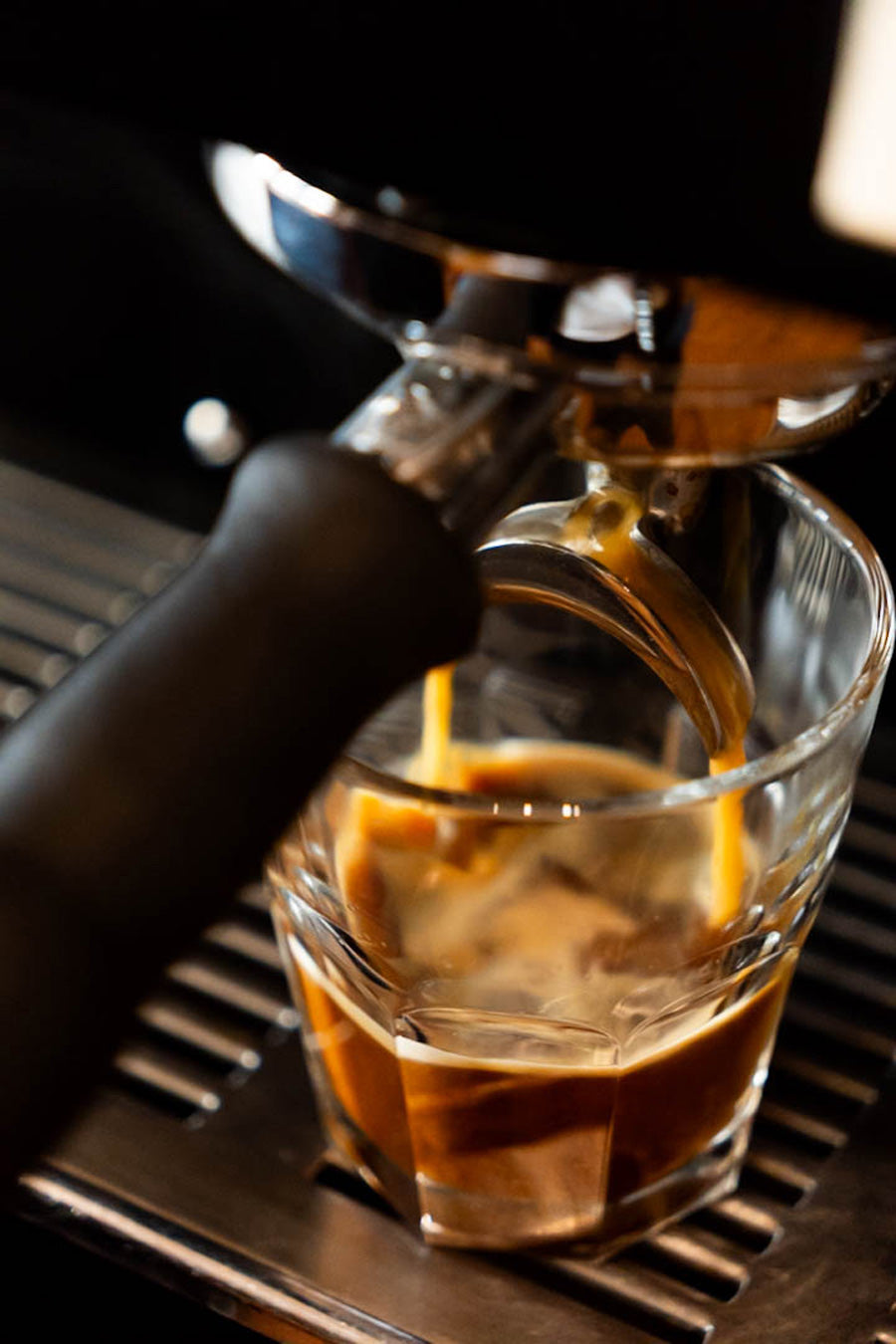
Medium to medium-dark espresso roasts are ideal for stable extraction and sweet, creamy shots. They offer lower acidity, a full body, and harmonize well in milk-based drinks – perfect for everyday use.
Stovetop espresso maker: medium roasts with low acidity
Stovetop espresso machines extract hot and fast coffee. Medium roasts with moderate acidity minimize bitterness and harshness. Grind finely, but not espresso-fine, and do not tamp; use relatively low heat.
AeroPress: flexible between light and medium
The AeroPress is an all-rounder. Light roasts are perfect for fruity, quick recipes; medium roasts produce syrupy, "espresso-like" cups. Vary the grind size and brewing time to control sweetness and body.
Seasonal recommendations
Summer: light roasts for iced filter & cold brew
Fresh, floral, and citrus notes work wonderfully over ice. Light washed Ethiopians or fruity naturals from Central America produce clear iced filter and sweet cold brew with little bitterness.
Autumn/Winter: medium to dark roasts for milk drinks
For cappuccino and similar drinks, medium to medium-dark espresso roasts deliver chocolate, caramel and nutty notes that harmonize perfectly with milk – ideal for cold days in Dresden, Chemnitz or Leipzig.

Buying advice: how to find the right roast in our store
We are happy to advise you in order to find the right coffee for you.
- Roasting date: as fresh as possible (2–10 weeks for espresso, 1–6 weeks for filter), but well-rested.
- Roast level/roast profile: Filter roasting vs. espresso roasting, information on development time and target profile.
- Brewing profile: recommended ratio, water temperature and extraction times are a plus.
- Origin details: Origin, processing, variety – provide clues to the cup profile.
Comparison table: Roast level × Cup profile × Preparation (for Featured Snippet)
| degree of roast | Cup profile (short) | Recommended preparation | Notice |
|---|---|---|---|
| Bright | High clarity, fruity acidity, light body | Hand filter/V60, Chemex, AeroPress (Short Contact) | Ideal for washed Ethiopian/Kenyan ice cream recipes in summer. |
| Medium | Balanced sweetness, moderate body, rounded acidity | V60, AeroPress, French Press, Moka Pot, Portafilter | Versatile; excellent for everyday setups |
| Medium dark | Low acidity, chocolate/nut flavor, full body | portafilter, moka pot, French press | Good for milk drinks, stable espresso extraction |
| Dark | Roasted aromas, bitterness, oily body | Portafilter (classic), moka pot | Use sparingly; can accentuate bitterness |
Common errors and troubleshooting
Too sour, too bitter, flat: adjust grind size, ratio, temperature
- Too acidic: grind finer, brew hotter (filter 93–96°C), slightly reduce ratio (e.g. from 1:16 to 1:15), longer contact time.
- Too bitter: grind coarser, brew at a cooler temperature (filter 90–93°C), increase the ratio (e.g. 1:17), shorten the contact time.
- Shallow/watery: grind finer or increase the dose, pour more evenly (filter), preheat, roast fresher.
- Espresso channeling: even distribution (WDT), consistent tamping, filling the portafilter, cleaning the grinder.
- Water quality: in the Dresden region, filter if necessary (e.g. 50–100 ppm TDS) for more clarity/sweetness.
Checklist & starter recipes for each preparation
Use these starting points and adjust them to the bean, roast level and water.
- General: fresh beans (not too fresh for espresso), consistent grind, clean equipment, pre-warmed pots/cups.
- Roast level match: light roast for clarity/fruit (filter), medium for balance, medium-dark for espresso/milk.
- Water: slightly mineralized (Ca/Mg), pH close to neutral; use a filter if tap water is hard.
- V60 (light to medium): 20 g coffee, 320 g water, 92–95°C, 2:30–3:00 min; bloom 40 g/30 s, then in 2–3 pours. Fineness: medium-fine.
- Chemex (light): 30 g coffee, 500 g water, 92–95°C, 3:30–4:30 min; grind rather coarsely for clarity.
- French Press (medium): 30 g coffee, 500 g water, 94°C; steep for 4 minutes, stir gently, skim off the crust, press; grind: coarse.
- Portafilter/Espresso (medium to medium dark): 18 g in, 36–45 g out (1:2 to 1:2.5) in 25–32 s at ~93°C; fineness: espresso-fine, precise distribution/tamping.
- Moka pot (medium): Fill the kettle with hot water, loosely fill the basket (do not tamp), low heat, remove just before bubbling; grind: fine-medium.
- AeroPress (flexible): 15 g, 230 g water, 92–95°C, 1:30–2:00 min, inverted or classic; grind size: medium to medium-fine.
- Cold Brew (light to medium): 1:8 to 1:10, coarsely ground, 12–18 hours in the refrigerator; filter, serve over ice.