Definition: What is a typical Italian espresso?
A typical Italian espresso is a short, concentrated coffee extraction with intense aroma density, thick crema, and a full body. It is classically prepared in a bar: quickly, consistently, and precisely. Key characteristics include a dark espresso roast , often with a noticeable Robusta content , and a clearly defined extraction process with a fixed recipe. The result: an espresso with notes of dark chocolate, nuts, and caramel, minimal acidity, and a pronounced finish.
Shot parameters (volume, time, brew ratio)
- Volume: approx. 25–30 ml (single) or 40–60 ml (double, depending on cup and crema)
- Retrieval time: 25–30 seconds from the start of the retrieval process
- Brew ratio 1:2: e.g., 18 g ground coffee → approx. 36 g espresso in the cup
- Pressure: approx. 9 bar at the brewing unit
- Water temperature for espresso: approx. 92–93 °C (depending on the bean and roast)
Sensory properties and crema
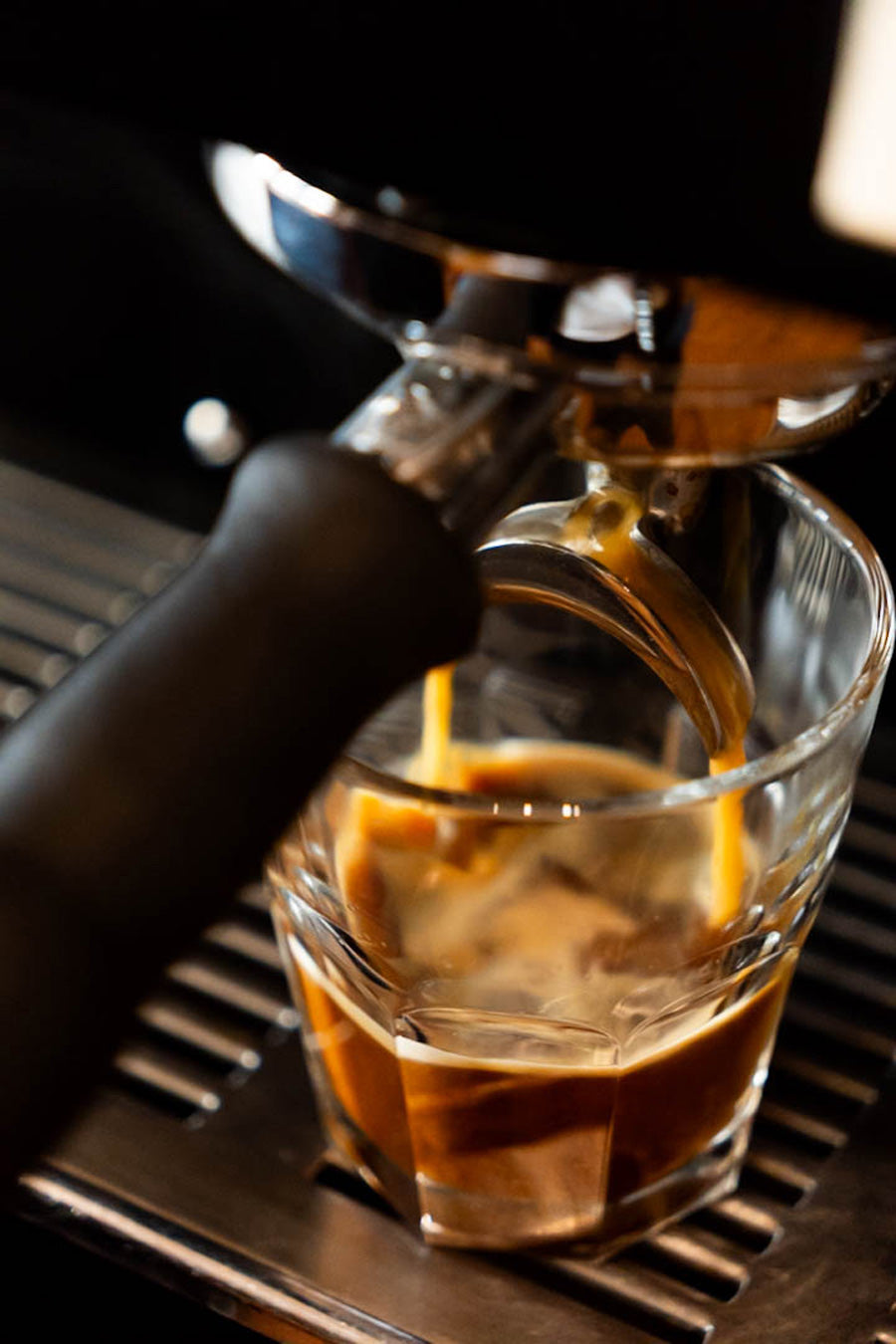
The crema of an Italian espresso is hazelnut to dark brown, dense, and finely textured. It protects the aroma, carries body and bitterness, and is a visual indicator of quality. On the palate, dark, roasted notes and sweetness predominate, while acidity remains subtle. A successful shot exhibits balance, structure, and a clean, crisp finish.
Typical characteristics: high Robusta content and dark roast.
Italian espresso is known worldwide for its strong style. This is achieved through traditionally dark roasts and a significant Robusta content in the espresso blend . Robusta contributes pressure resistance, crema stability, body, and caffeine – ideal for short, creamy shots and milk-based drinks like cappuccino or caffè macchiato.

Arabica vs. Robusta in the blend
- Arabica: diverse aromas (fruity, floral, sweet), less bitterness, less crema, lower caffeine content
- Robusta: earthy, nutty-chocolatey impression, pronounced crema, more body, higher caffeine content, lower acidity
Classic, typically Italian espresso relies on blends with 20–50% Robusta, sometimes even more. This creates the texture, stability, and characteristic, strong flavor for which Italy is known – especially when combined with milk.
Roasting profiles and solubility
Darker roasts generally increase the solubility of the beans. This facilitates reliable espresso preparation at the bar, even with high throughput. The aromas shift towards chocolate, caramel, and roasted notes, while the acidity recedes. For home baristas, this means that darker profiles are more forgiving and work with a narrower adjustment range for grind size, dose, and extraction time.
Why Italian espresso is so popular worldwide
The secret to its success lies in the consistency of the result: strong, creamy, served quickly – similar everywhere. This clarity of style has shaped Italian coffee globally and made it synonymous with espresso.
Bar culture, consistency and machine standard
- Bar culture: Espresso as a quick moment of enjoyment while standing, accompanied by a social ritual
- Consistency: Standardized recipes ensure consistent quality, regardless of the region.
- Machine standard: professional portafilters with saturated brew groups, approx. 9 bar, stable temperature and powerful grinders for homogeneous particle distribution
The interplay of bean profile, machine quality and bar craftsmanship makes Italian espresso so accessible – whether in Turin, Bari or Berlin.
Preparation like in an Italian bar: step by step
With a good espresso machine , a precise grinder, and fresh beans, you can achieve very similar results at home. Here's how:
Grind size, dose, tamping
- Grind the beans fresh: use a fine espresso grind that allows a brew ratio of 1:2 in 25–30 seconds.
- Select dose: 7–9 g (Single) or 14–18 g (Double) into the sieve – appropriate to the sieve volume.
- Distribute: Break up lumps, level surface (WDT or leveler).
- Tamping : a single, straight application with constant pressure (approx. 10–15 kg). The goal is a smooth, dense puck surface.

Temperature, pressure (9 bar), reference time (25–30 s)
- Water temperature: approx. 92–93 °C – dark roasts tolerate the lower end of the range better.
- Pressure: stable at around 9 bar at the brew group.
- Brewing time: 25–30 seconds; stop the brewing process at the first noticeable blonding.
Extra tip: Pre-infusion of 2–6 seconds can reduce channeling and increase extraction uniformity.
Water quality and brew ratio 1:2
Use water with moderate total hardness (e.g., 3–6 °dH carbonate hardness). Water that is too hard emphasizes bitterness, while water that is too soft makes shots taste flat. A brew ratio of 1:2 creates a balance of sweetness, body, and clarity – perfect for dark, Italian-style coffees.
Common Errors and Troubleshooting
Even robust, dark espressos are sensitive to errors. This guide will help you quickly correct the most common deviations.
Bitter, sour, or thin – causes and solutions
- Bitterness: often caused by over-extraction, excessively fine grind, brewing time exceeding 25–30 seconds , or excessive temperature. Solution: coarser grind, maintain the correct ratio, slightly lower temperature, and stop brewing early.
- Acidic flavor: Underextraction, grind too coarse, brewing time too short, temperature too low. Solution: Grind finer, achieve a 1:2 ratio, increase temperature, tamp more evenly.
- Thin/watery: too coarse, too low dose, channeling. Solution: Check dose, improve WDT/leveling, tampe evenly, choose a sieve appropriate for the dose.
- Unstable crema: beans that are too fresh or too old, an unsuitable blend (too little Robusta), or water that is too soft. Solution: use beans 7–21 days after roasting, use a blend with a Robusta component, and balance the mineral content of the water.
Ristretto, espresso, lungo: differences
The three classic wines differ primarily in the amount of liquid extracted, and therefore in concentration, body, and extraction rate. This significantly influences the balance of sweetness, bitterness, and acidity.
Reference quantity and flavor profile
- Ristretto: very short extraction time (e.g., 1:1 to 1:1.5). Extremely concentrated, syrupy flavor, low bitterness, maximum sweetness/body. Approximately 15–20 seconds, fine grind.
- Espresso: classic 1:2 ratio. Balanced blend, dense crema, ideal straight and as a base for milk-based drinks.
- Lungo: longer extraction time (1:3+). A leaner, more pronounced bitterness is possible, with greater clarity and less body. Use sparingly with dark roasts to avoid bitterness.
For beginners: Start with an espresso ratio of 1:2. Know your bean, and then explore ristretto vs. lungo to find your favorite profile.
Seasonality & Trends
Italian coffee thrives on ritual – and adapts seasonally. Dark, strong profiles harmonize with spicy notes in winter, while freshness and lightness are in demand in summer.
Winter classics vs. summer drinks (Espresso Tonic, Affogato)
- Winter: Espresso straight, caffè corretto, marocchino, mocha chocolate. Strong, dark blends with Robusta beans carry milk and sweetness particularly well.
- Summer: Espresso Tonic (shot over ice and tonic), Shakerato (shaken espresso with ice and sugar), Affogato (espresso over vanilla ice cream). For drinks with ice, make the shot slightly shorter and more concentrated.
Product recommendations from Kaffanero
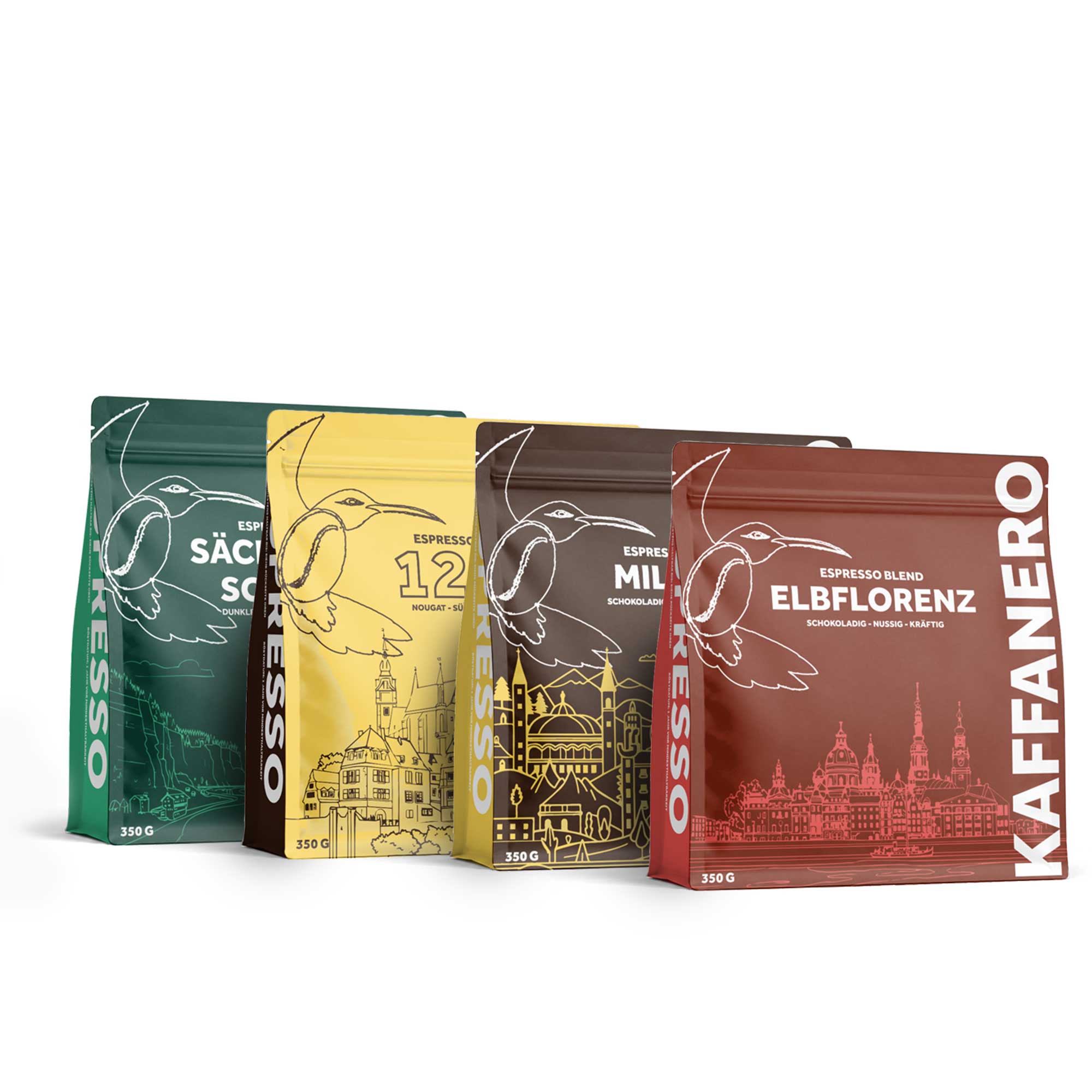
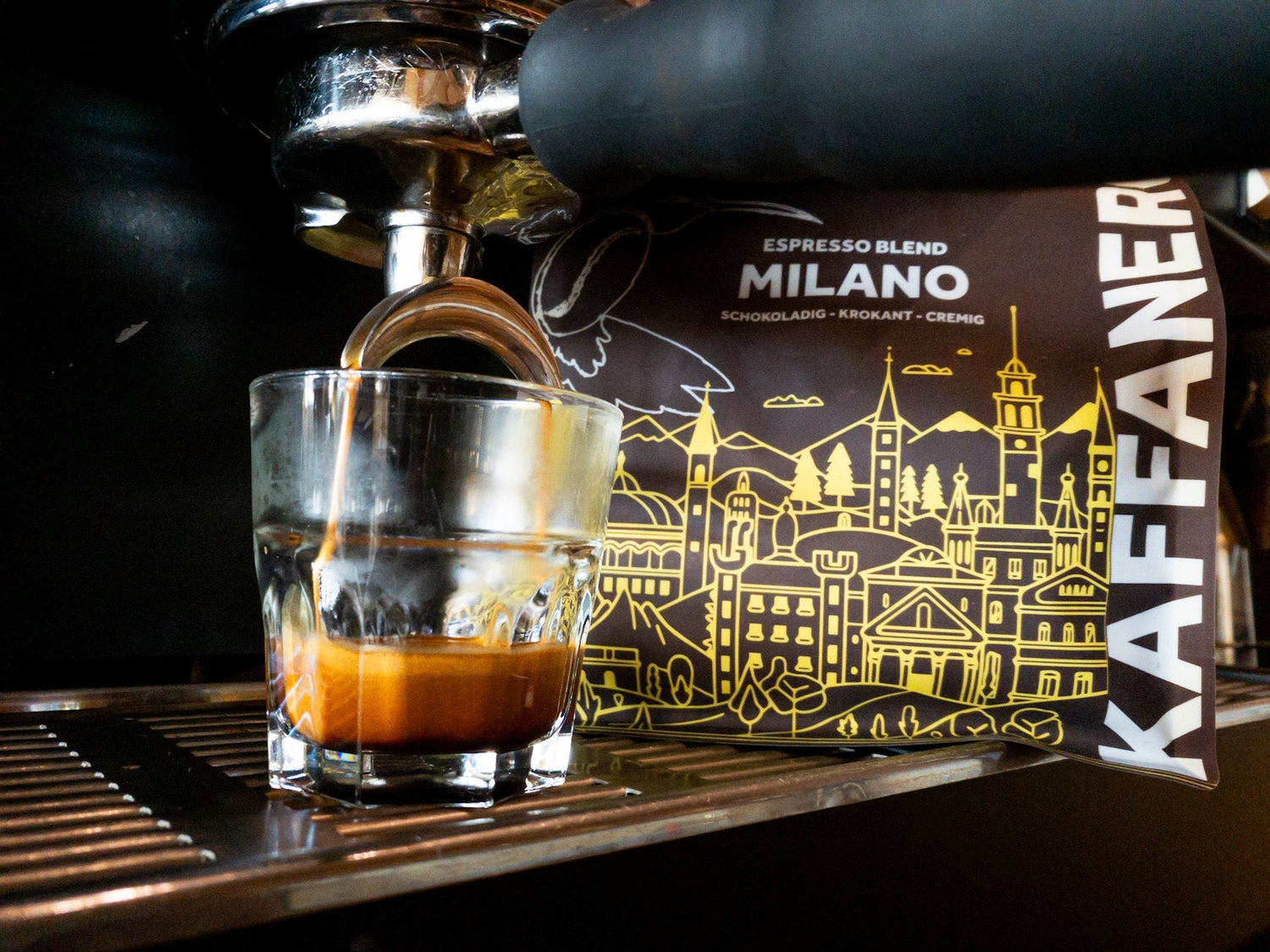
Our Espresso Milano is a typical Italian espresso roast - 70% Arabica and 30% Robusta.
Dark espresso blends with 20–50% Robusta
- Strong bar blend (approx. 30–40% Robusta): rich crema, full body, notes of dark chocolate and nut – ideal for cappuccino
- Classic Southern Italian blend (40–50% Robusta): maximum texture, very low acidity, excellent stability
- Balanced Northern Italian blend (20–30% Robusta): slightly sweeter and clearer, yet with authentic bar character.
Portafilter accessories, grinders and care products
- Precision sieve and tamper matching the sieve size (58 mm standard): for even tamping
- A consistently grinding espresso grinder with stepless adjustment: essential for reproducibility.
- WDT tool/leveler: reduces channeling, improves extraction
- Blind filter and cleaning agent: Backflush routine keeps valves and shower clean
- Water filter/softener: protects the machine and stabilizes the taste
Take your time with new purchases: First optimize the water, grind size and recipe – often this makes the biggest difference in the cup.