Espresso, Ristretto, Lungo, or Americano? Differences, Taste & Preparation
Whether you're setting up your first portafilter machine or perfecting your espresso workflow: This comparison of espresso types clearly and concisely shows you the differences between Ristretto, Espresso, Lungo, and Americano, how they taste, and how to reliably prepare each variant. Also included: our suitable espresso recommendations, common mistakes, and a practical checklist.
Quick Overview: What Distinguishes Espresso, Ristretto, Lungo, and Americano?
Definitions in 1 Minute
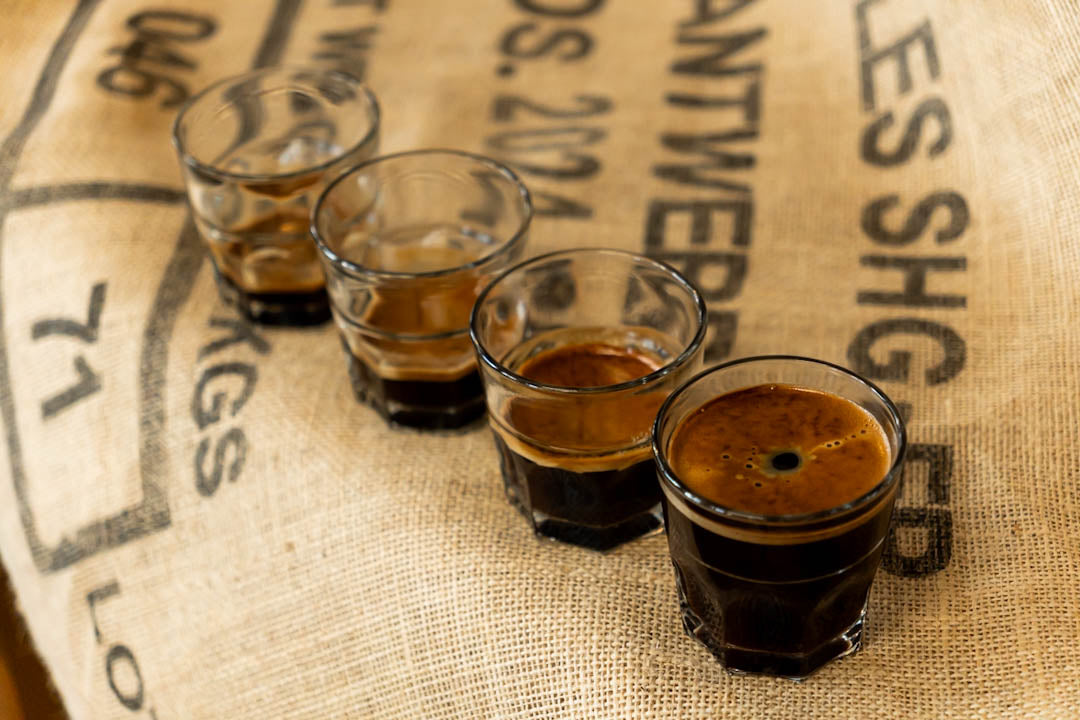
Ristretto is the most concentrated, shorter-extracted variant – a short, sweet, and intense shot. Classic Espresso is the balanced reference with a harmonious ratio of sweetness, acidity, and bitterness. Lungo is extracted longer and provides more volume, but can quickly taste bitter if over-extracted. Americano is not a longer extraction, but an espresso diluted with hot water – milder in mouthfeel, but with the caffeine of the underlying espresso.

Quick Comparison: Brew Ratio, Extraction Time, Volume, Caffeine
- Ristretto: Brew Ratio approx. 1:1–1:1.5; 15–20 ml; 20–25 s; Caffeine: tends to be slightly less than in espresso.
- Espresso: Brew Ratio approx. 1:2; 25–30 ml; 25–30 s; Caffeine: approx. 60–80 mg per single shot (variable).
- Lungo: Brew Ratio approx. 1:3–1:4; 45–60 ml; 30–40 s; Caffeine: tends to be slightly higher, but thinner mouthfeel.
- Americano: 1 Espresso + 100–150 ml hot water; order determines crema and intensity; Caffeine as per the espresso used.
Note for Lungo vs Americano: The Lungo comes out of the machine longer into the cup; the Americano is made by diluting a "normal" espresso with water.
Taste Comparison: Intensity, Sweetness, Bitterness, Body, Aftertaste
"Espresso vs Ristretto" is not just a question of volume. How much water is extracted from a given amount of coffee (Espresso Brew Ratio) influences which aromas are dissolved. Shorter ratios focus on sweetness and body, longer ones promote bitter compounds and dissolve more caffeine, but also more dry notes from the puck.
Sensory Profiles per Preparation
- Ristretto: very dense, syrupy, concentrated sweetness, pronounced body, short to medium acidity, low bitterness – ideal for chocolatey, nutty blends. Great "winter shot," perfect neat.
- Espresso: balanced between sweetness, acidity, and bitterness, creamy body, clean aftertaste. Universal, neat or as a base for cappuccino and flat white.
- Lungo: lighter body, more volume, tends to have a drier aftertaste. If extracted too long, bitter, "woody" notes can occur. With a moderate roast profile and clean extraction, an aromatic, clear Lungo can be achieved.
- Americano: soft entry, slender body, the aromatic signature of the espresso is retained, but appears "lighter." Ideal for longer enjoyment; less bitterness than an over-extracted Lungo.
Preparation: Step-by-Step for Each Coffee Type
For all variants: freshly roasted, freshly ground beans, consistent espresso grind size, a clean machine, and precise work are crucial. Use a scale and a timer – this way you can hit target values reproducibly.
Ristretto: Ratio 1:1–1:1.5, 15–20 ml, 20–25 s, fine grind
- As an example, use 18 g of coffee grounds. Target in the cup: 18–27 g in 20–25 s.
- Grind size slightly finer than for espresso. The goal is a dense, slow flow; the crema remains dark and dense.
- Distribute and tamp evenly (avoid channeling). Pre-infusion, if available, 2–3 s.
- Stop as soon as you have reached 1:1–1:1.5. Ristretto preparation rewards with concentrated sweetness – do not let it "run on."
- Tip: Darker, full-bodied blends are more forgiving for Ristretti than very light roasts.
Espresso: Ratio 1:2, 25–30 ml, 25–30 s, fine-moderate
- 18 g in, 36 g out in approx. 25–30 s as a starting point (Single: e.g., 9 g in, 18 g out).
- Choose grind size so that the extraction flows steadily after 5–7 s. Goal: syrupy, even stream.
- Water temperature 92–94 °C; brewing temperatures significantly above 95 °C increase bitterness.
- If the shot is too acidic, grind slightly finer or increase temperature slightly; for bitterness, grind coarser or extract for a shorter time.
- Consistency: Same dose, same distribution ritual, same tamp pressure.

Lungo: Ratio 1:3–1:4, 45–60 ml, 30–40 s, slightly coarser
- 18 g in, 54–72 g out. Extended extraction time (30–40 s), grind size slightly coarser than espresso.
- Goal: Clear, clean flow without excessive blonding. As soon as strong blonding begins, you risk over-extraction. (Blonding: Espresso or coffee flow becomes lighter, thinner, and paler towards the end of extraction.)
- Use medium-light to medium roasts with clear acidity – they retain structure at higher extraction.
- Fine-tune taste: If it becomes bitter-dry, grind coarser or reduce ratio (e.g., 1:3 instead of 1:4).
- Optional: Slightly lower temperature (91–92 °C) to limit bitter compounds.
Americano: Espresso + 100–150 ml hot water, order & temperature
- Brew a balanced espresso (e.g., 18 g in, 36 g out in 27 s).
- Heat water to approx. 92–96 °C. For immediate drinking, rather 85–90 °C in the cup.
- Variant A (Classic Americano): First water into the cup (100–150 ml), then the espresso. Mild texture, crema remains slightly finer.
- Variant B (Espresso first): Carefully pour water into the espresso. More intense, can disturb crema – taste slightly different.
- Long Black vs Americano: Long Black = water first, then espresso; the crema remains more prominent and the impression is more intense. Americano can be more variable in order.
- Americano Instruction Tip: Use filtered water (approx. 80–120 ppm total hardness) to avoid bitterness.
Bean Choice and Roast Level: Which Kaffanero Roast Suits Which Variant?
The beans determine how sweetness, acidity, body, and bitterness behave – and how well a preparation method harmonizes. Kaffanero Espresso Beans are designed for precise extraction and cover a wide spectrum from classically chocolatey to fruity-modern.
Recommendations: Blend vs. Single Origin, Arabica/Robusta Ratio
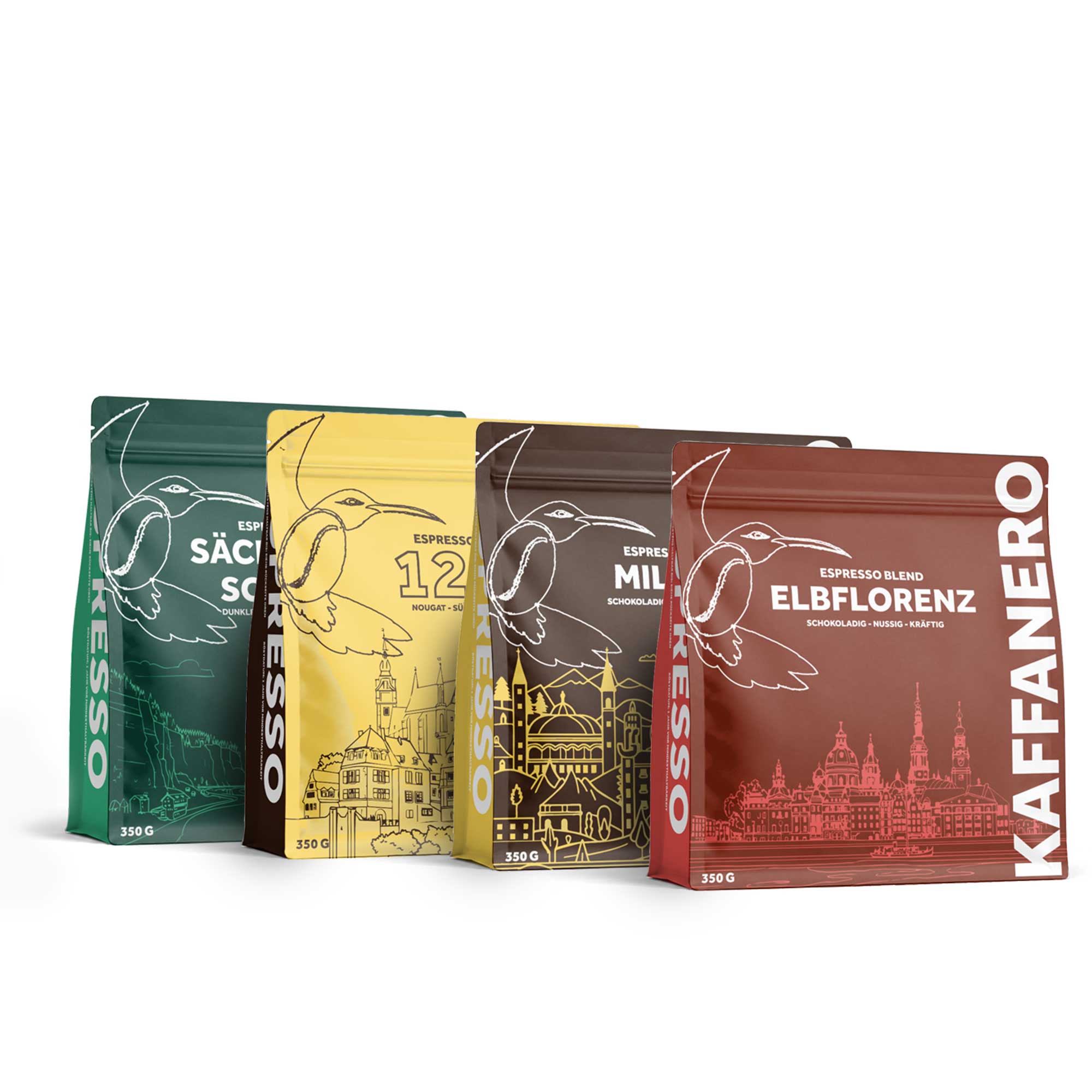
- Ristretto: Strong, darker roasts like our Espresso Elbflorenz or Espresso Milano with a moderate Robusta content (e.g., 10–30%) provide dense body, fine crema, and a sweet punch. Ideal for short ratios.
- Espresso: Medium-dark Kaffanero roasts with a focus on balance. Arabica-dominated blends or accessible single origins with chocolate/nut notes work very well - Coffee from Colombia or El Salvador as an alternative to our classic espresso roasts.
- Lungo: Medium-light Kaffanero roasts with clear, defined acidity (e.g., washed Arabicas). They show transparency rather than bitterness in longer ratios.
- Americano: Versatile Kaffanero blends or expressive single origins. As an Americano, the aromatic signature emerges without being overpowering.
Single Origin or Blend? For consistent results in everyday life, a blend is often more stable. Single Origins are worthwhile if you specifically want to highlight certain fruit or terroir notes in espresso vs Ristretto or Lungo vs Americano.
Common Mistakes and How to Avoid Them (Over-extraction, Channeling, Temperature)
- Over-extraction: Bitter, dry, astringent. Solution: grind coarser, shorter ratio, lower temperature by 1–2 °C, keep an eye on blonding (stop early).
- Under-extraction: Sour, thin, "grassy." Solution: grind finer, longer ratio (e.g., from 1:1.8 to 1:2), slightly increase brewing temperature.
- Channeling: Irregular flow, streaks in the crema, TDS fluctuations. Solution: clean distribution (WDT, leveling), even tamp, dry portafilter, clean shower screen.
- Incorrect grind size change between variants: Each variant needs its own calibration. Note down grind size, ratio, and time for each recipe.
- Water issue ignored: Water that is too hard emphasizes bitterness and scales the machine. Goal: moderately mineralized water (KH ~3–5 °dH). Use filters or bottled water with a suitable profile.
- Temperature drift: Erratic heating cycles create fluctuations. Solution: let the machine heat up (at least 20–30 min), flush if necessary, preheat portafilter and cup.
Serving Ideas and Seasonality: Summer Iced Americano, Winter Ristretto, Food Pairing
- Summer: Iced Americano – Glass with ice cubes, 1 espresso, 120–150 ml cold water over it. Optionally, orange zest or a splash of tonic for a fresh twist.
- Autumn/Winter: Ristretto doppio as a short, intense warmer. For those who prefer it creamier: Ristretto macchiato with a hint of microfoam.
- Food-Pairing:
- Ristretto: High-cocoa chocolate, hazelnut pastries.
- Espresso: Almond croissant, biscotti, cheesecake.
- Lungo: Lemon cake, shortbread, light tarts.
- Americano: Scones, oat cookies, light fruit cakes.
- Milk variants: Avoid for Americano – water + milk tastes flat. Instead, use espresso as a base for cappuccino or flat white.