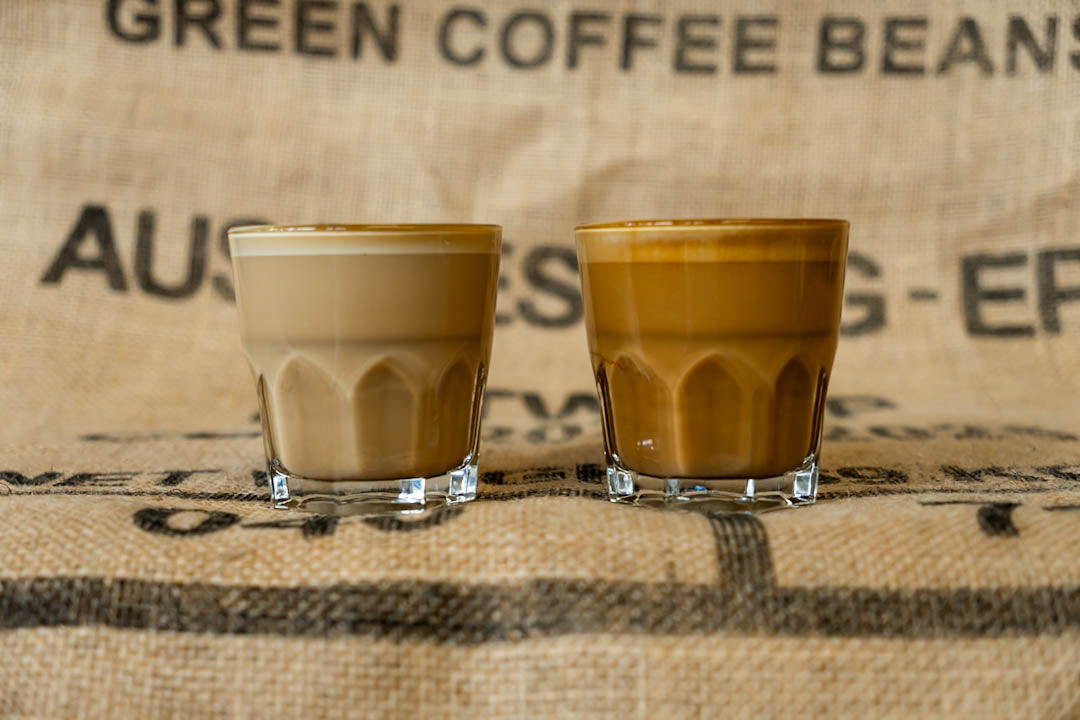
Flat White vs. Cappuccino – two classics that look similar but taste different. This guide shows the true Flat White vs. Cappuccino difference: from espresso and milk ratio to temperature and foam structure, and precise preparation. Ideal for coffee lovers, ambitious beginners, and experienced home baristas.
Flat White vs. Cappuccino: The Overview
Definition and Origin of Both Drinks
The Flat White originated in Australia/New Zealand and stands for an intense espresso flavor, carried by silky microfoam without a "foam cap." The drink appears compact, velvety, and harmonious – ideal in smaller cups. The Cappuccino has roots in Italy and combines espresso with creamy, denser milk foam. It tastes milder, rounder, and appears more voluminous in the cup.
Simply put: Flat White = flat, silky surface and lots of espresso character. Cappuccino = airy, creamy foam with a softer mouthfeel. This explains the core of Flat White vs. Cappuccino.
Cup Volume, Espresso and Milk Ratio in Comparison
- Flat White: typically 150–170 ml cup ("Tulip"), usually a double espresso (approx. 36–40 g yield) with little, finely integrated microfoam.
- Cappuccino: 160–180 ml cup, a single or modern double espresso with 1–2 cm dense foam crown.

Thus, the Flat White is more intense and "flatter" in texture, while the Cappuccino appears creamier and airier. Both benefit from precise extraction and correct milk temperature.
Ingredients and Equipment
Bean Selection and Roast Level for Both Drinks
For Flat White and Cappuccino, espresso roasts with clear sweetness and low bitterness are suitable. Blends with a Brazilian base for chocolate/nut notes, complemented by medium-light roasted Arabicas for fruit and caramel, are popular. Robusta components provide more body and stable crema – useful if you prefer a particularly defined cappuccino foam.
- Flat White: medium to medium-light roast, clear sweetness and texture; single origins work well if they are chocolaty-nutty.
- Cappuccino: medium roasts with good balance; blends with some Robusta increase stability and presence under dense foam.
Grinder, Portafilter, Milk Pitcher, and Thermometer
- Espresso grinder: stepless adjustment, homogeneous grind distribution, low retention.
- Portafilter: stable temperature, reliable pressure. Precision basket (corresponding to your dose) helps with reproducibility.
- Milk pitcher: pointed spout for latte art, 350–600 ml depending on portion size. Thin-walled pitchers allow temperature to be felt faster.
- Thermometer: facilitates consistent results; 55–60 °C (Flat White), 60–65 °C (Cappuccino).
Perfect Preparation: Flat White Step-by-Step
Espresso Recipe (Dose, Ratio, Time)
For precise Flat White preparation, a double espresso is recommended as the focus of the drink:
- Dose: 18 g coffee in a 58mm basket (adjust to machine and basket; 16–20 g is common).
- Ratio: 1:2 to 1:2.2 (e.g., 18 g in, 36–40 g out).
- Time: 26–30 seconds from pump start, even flow, hazelnut brown color.
- Important: even distribution (WDT/leveler), clean tamping, stable extraction without channeling.
Milk Texture: Silky Microfoam and Pouring Technique
The goal is a very fine microfoam that integrates into the espresso like liquid silk – without a visible, thick foam cap.
- Fill cold pitcher with fresh whole milk (or barista plant-based milk): approx. up to just below the spout.
- Steam wand just below the surface, briefly "stretching" (incorporating air) until the milk is lukewarm.
- Then lower the wand deeper, create a stable vortex ("rolling") until 55–60 °C is reached.
- Tap and swirl the pitcher, polishing any bubbles.
- Pour: tilt the cup slightly, pour low in the center, "paint" the crema, lift slightly at the end for a flat, glossy surface or a small tulip/heart.
Tip: Too little air leads to flat texture, too much air to foam caps. The Flat White remains visually "flat" and glossy.
Perfect Preparation: Cappuccino Step-by-Step
Espresso Recipe (Single vs. Double)
Classic cappuccino preparation can be done with a single or double shot:
- Italian Style Single: 8–10 g in, 20–25 g out, 25–28 s – milder, very milk-friendly.
- Modern Double: 16–18 g in, 32–40 g out, 26–30 s – more prominent espresso flavor under the foam.
Choose the style based on taste and cup volume. Balanced extraction is important so that the milk emphasizes sweetness and not just bitterness.
Milk Frothing: Creamy, Dense Foam (1–2 cm)
A cappuccino thrives on fine-pored, but slightly denser foam than a Flat White.
- Start with cold milk in the pitcher. "Stretch" a little longer than for a Flat White – incorporate noticeably more air.
- Then "roll" until 60–65 °C is reached. The foam should be elastic and glossy.
- When pouring, first integrate milk, then froth denser and form a 1–2 cm foam crown; latte art patterns like a heart, rosetta, or monk's head fit very well.
Too voluminous? Then you've incorporated too much air. Too flat? Stretch a little longer and bring the wand closer to the surface.
Taste and Mouthfeel: What Makes the Difference?
Influence of Ratio, Temperature, and Foam Structure
- Ratio: More espresso relative to milk = more intense (Flat White). More foam volume = milder/creamier (Cappuccino).
- Temperature: 55–60 °C emphasizes milk sweetness and silkiness. 60–65 °C gives more density; above 65 °C, milk tastes flat and less sweet.
- Foam structure: Microfoam without a foam cap blends with espresso (velvety). Dense, creamy foam forms a soft, airy layer (creamy).
The interplay results in the noticeable difference: The Flat White carries the espresso, the Cappuccino embraces it.
Troubleshooting: Common Mistakes and Quick Fixes
Overheated Milk Foam, Large Bubbles, Bitter Shots
- Too hot: Limit temperature to 55–60 °C (Flat White) or 60–65 °C (Cappuccino). Use a thermometer and stop in time.
- Large bubbles: Position wand just below the surface, aim for a soft, fine hiss; then tilt the pitcher slightly and create a vortex. Polish bubbles by tapping/swirling.
- Bitter shots: Coarser grind, check ratio (1:2 as a starting point), extraction 26–30 s. Use fresh beans with appropriate roast.
- Flat taste: Under-extraction – grind finer, increase dose, or extract longer. Also, is the milk too cold? Pay attention to target temperature.
- Lack of consistency: Same dose, same basket, consistent tamping, and identical milk volume in the pitcher ensure reproducibility.
Variations, Latte Art & Seasonal
Iced Flat White, Cappuccino with Cocoa and Winter Spices
- Iced Flat White: Doppio over ice cubes, cold microfoam (with cold frother) – silky, refreshing, without getting watery.
- Cappuccino "tradizionale": Light cocoa powder on the foam crown. Dose subtly so the espresso remains discernible.
- Winter spices: Add cinnamon, cardamom, or a pinch of allspice to the milk – sparingly so as not to overpower the milk's sweetness.
- Latte Art: Flat White is perfect for fine tulips/rosettas; Cappuccino for high-contrast hearts or monk's heads thanks to higher foam height.
Buying Guide & Product Recommendations from Kaffanero
Espresso Beans, Grinder, Tamper, Milk Pitcher
- Espresso beans: Choose a balanced espresso roast from Kaffanero Kaffeerösterei with clear sweetness and little bitterness. For Flat White, medium-light chocolaty-nutty is good; for Cappuccino, blends with a slight Robusta content can provide more body.
- Grinder: A stepless espresso grinder with uniform grind is essential. Pay attention to easy cleaning and reproducible scales.
- Tamper: Ergonomic, flat, and suitable for the basket (e.g., 58.5 mm) for clean edges. A leveler/WDT tool helps prevent channeling.
- Milk pitcher: Precise spout for latte art and good temperature feel. A barista thermometer from the Kaffanero range makes control easier.
With a reliable portafilter, correct baskets, and our fresh espresso beans, you'll achieve stable results – whether Flat White or Cappuccino.
Quick Check: Decision Aid Flat White or Cappuccino?
- Do you like an intense espresso taste with silky integrated milk? Choose the Flat White.
- Do you love creamy texture and a soft foam crown? Choose the Cappuccino.
- Small cup, lots of espresso character: Flat White.
- Classic Italian mouthfeel, can be drunk slightly cooler: Cappuccino.
Next steps: Experiment with dose and ratio, compare 55–60 °C vs. 60–65 °C, and practice pouring technique. For a deeper understanding, we recommend further reading on espresso extraction, milk emulsion, and latte art – feel free to check out our Beginner Barista Seminar.