Few things shape the first impression of an espresso as much as the crema: the dense, golden-brown foam that displays gloss and structure in the cup. But what does espresso crema really tell us? How does it form, how does it influence the taste, and how can the crema be improved? This guide explains the physics and chemistry behind crema, separates myths from reality, and shows practical ways to achieve a stable, delicious crema – from the correct espresso grind size and brew ratio to water quality, puck preparation, and the role of Robusta.
What is crema and how does it form?
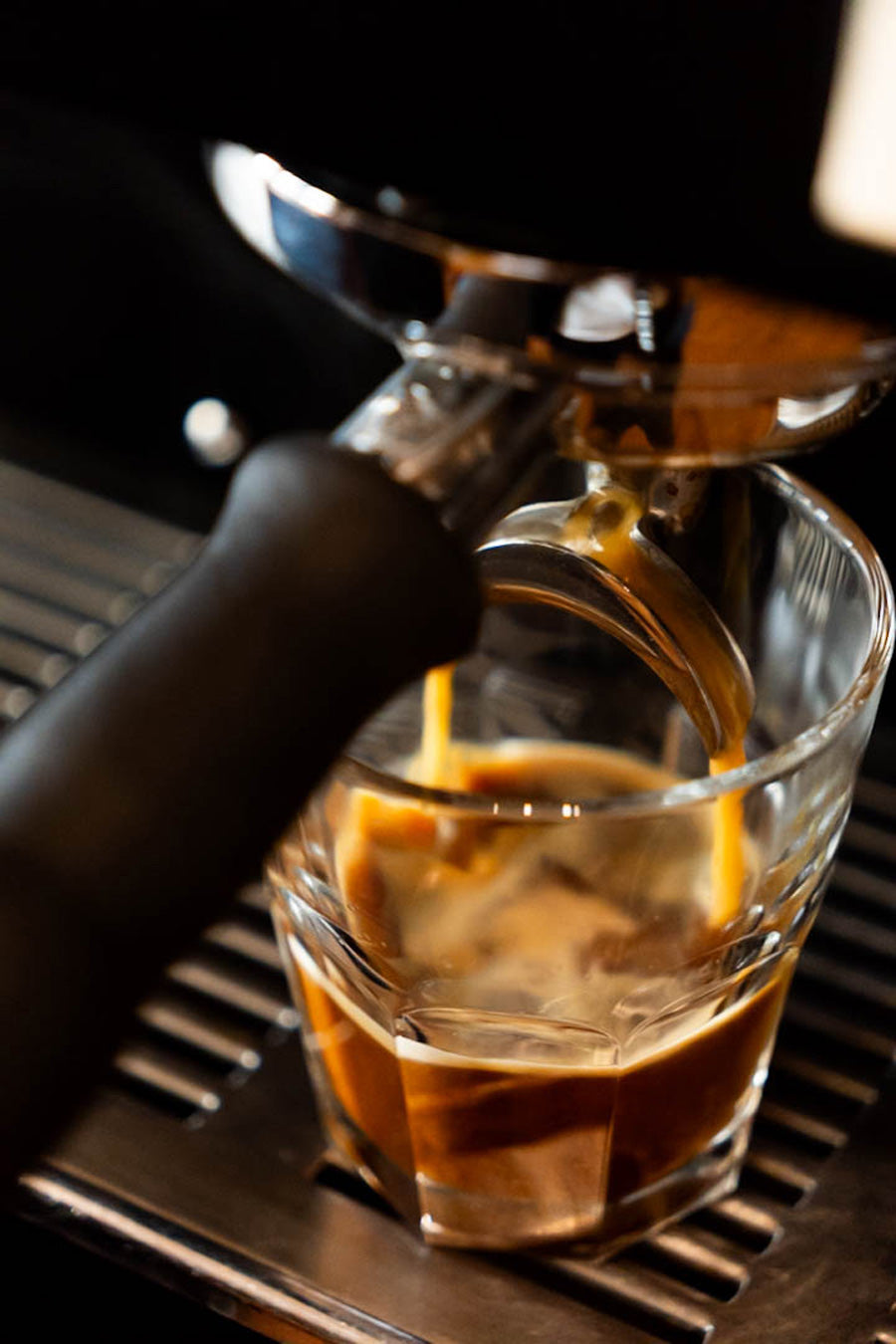
Crema is a fine-bubbled emulsion of gas, coffee oils, and dissolved solids that collects on the surface during espresso extraction. It forms reliably only when hot water is forced under high pressure through finely ground coffee – a process that combines chemical and physical peculiarities.
Physics & Chemistry: CO2, Lipids, Proteins, and Pressure
During roasting, coffee beans become enriched with carbon dioxide (CO2). Under the typical espresso pressure of about 9 bar, this CO2 dissolves in the water and is simultaneously surrounded by coffee oils (lipids) and proteins. When the freshly extracted espresso flows from the portafilter into the cup, the pressure drops abruptly – the dissolved gas expands and forms microbubbles.
Why does the crema remain? Lipids and protein-specific components stabilize the bubble walls and slow down their bursting. In addition, the high concentration of dissolved solids (e.g., melanoidins) increases viscosity. In short: Without enough CO2 (freshness!), without pressure, and without emulsifying coffee oils, there would be no crema.
- CO2: Gas source and driver of foam formation
- Lipids/Proteins: Emulsifiers that stabilize the bubbles
- Pressure: Dissolves CO2 and extracts oils; pressure drop creates expansion
- Temperature: Affects solubility, viscosity, and extraction chemistry
Difference: Espresso Crema vs. Coffee Crema (Café Crème)
Espresso crema forms under high pressure and is dense, fine-pored, and oily. A "Kaffee Crema" (Café Crème), however, refers to a longer drink (similar to an Americano or Swiss Café Crème) with a significantly larger brew ratio and often lower pressure. The crema in this case is usually lighter, coarser, and less stable. Filter coffee can also show a thin layer of foam, but without the espresso pressure, the characteristic, oily stability is missing. Therefore, crema coffee is not the same as crema espresso.
Does crema affect taste?
Crema carries aromas, but not all conclusions drawn from its appearance are correct. It primarily influences mouthfeel and initial aroma perception – the actual taste of the espresso, however, develops in the entire drink.
Myths vs. Reality: Appearance, Mouthfeel, Aroma Perception
- Myth: "Lots of crema = automatically better taste." Reality: Lots of crema can result from fresh beans or Robusta content – that's not automatically better, just different. Balance and extraction are important.
- Myth: "Dark crema means strong and high quality." Reality: Very dark crema can indicate over-extraction, too high temperature, or too fine a grind – often with bitter notes.
- Mouthfeel: Crema gives the first sip creaminess and density, but can also concentrate bitterness. Those who are very sensitive stir the crema in or spoon it off.
- Aroma perception: Crema immediately delivers volatile aromas to the nose; it strongly influences the first impression but is not an objective quality criterion on its own.
What does crema reveal about grind size, brew ratio, and freshness?
Crema is a useful indicator. Its color, texture, flow pattern, and stability allow conclusions to be drawn about grind size, flow time, espresso brew ratio, and bean freshness.
Grind Size Indicators: Flow, Texture, Color

- Too coarse: Very fast flow, pale, large-pored crema that quickly disintegrates. Frequent consequence: under-extracted crema – watery, sour, little body.
- Too fine: Thick flow or channeling; very dark, sometimes mottled crema; often over-extracted crema – bitter, dry, astringent.
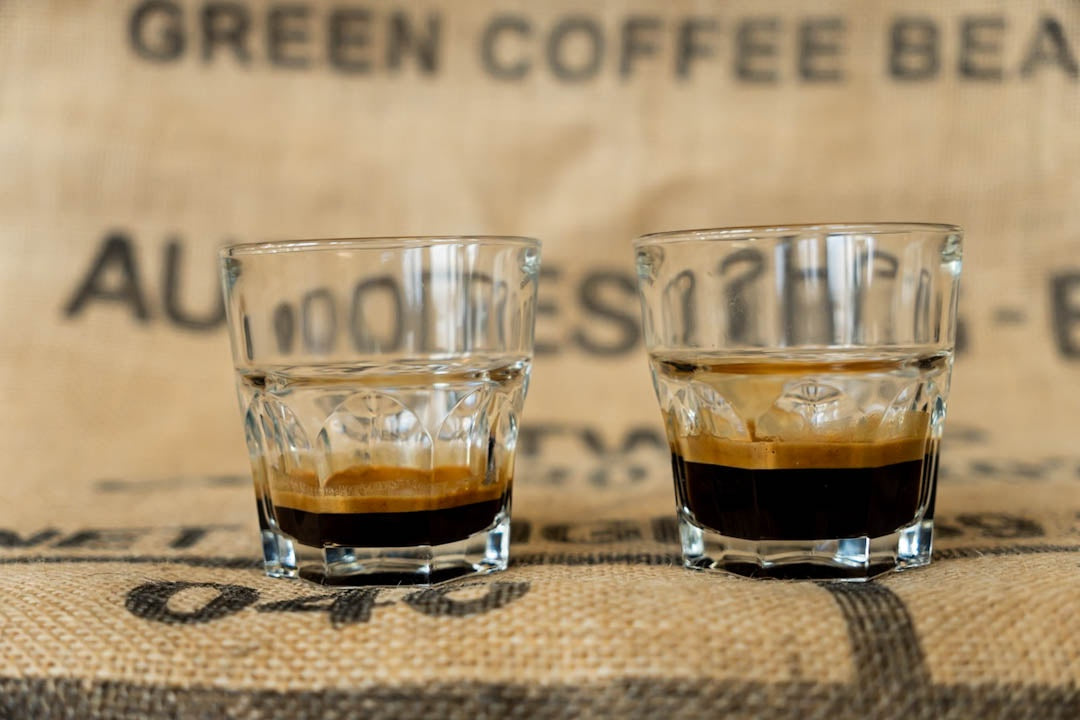
- Just right: Even flow, fine texture, golden to hazelnut-colored crema with slight "tiger stripes." This indicates a balanced extraction.
Crema color meaning in short: very light = usually too short extraction; very dark = often too long or too hot. The taste test remains decisive.
Brew Ratio, Extraction Time, and Shot Volume
The classic espresso ratio of 1:2 (Espresso Recipe 1:2) is a good starting point. Example: 18g of coffee grounds in the basket yield 36g of espresso in 25–30 seconds. A too low ratio (too little output) with a long time often leads to overemphasized bitterness; a too high ratio (too much output) can cause thin, quickly collapsing crema and a watery taste.
- Use 1:2 as a base, then fine-tune according to taste
- Consider water flow, grinder setup, and basket (14–20g baskets behave differently)
- Weigh shot mass instead of volume (crema distorts volume measurement)
Roast Date, Degassing, and Bean Freshness
Fresh coffee beans crema: In the first few days to weeks after roasting, coffee degasses CO2. Very fresh (0–5 days) can produce excessive crema, instability, or erratic extractions. The ideal window for espresso is often about 7–30 days after the roast date (varies depending on roast, packaging, and storage). Beans that are too old (> 8–12 weeks, depending on storage) often result in pale, short-lived crema and flat taste.
- Store cool, dark, dry; consume opened bags promptly
- For very fresh beans: Grind slightly coarser or let rest for 1–2 weeks
- For old beans: Lower expectations for crema, consider using Robusta content
Robusta and its role for crema
Robusta varieties – compared to Arabica – tend to produce more crema. This is due to higher levels of insoluble components, specific proteins, and the way CO2 is bound.
Blending Ratios, Stability, and Sensory Properties
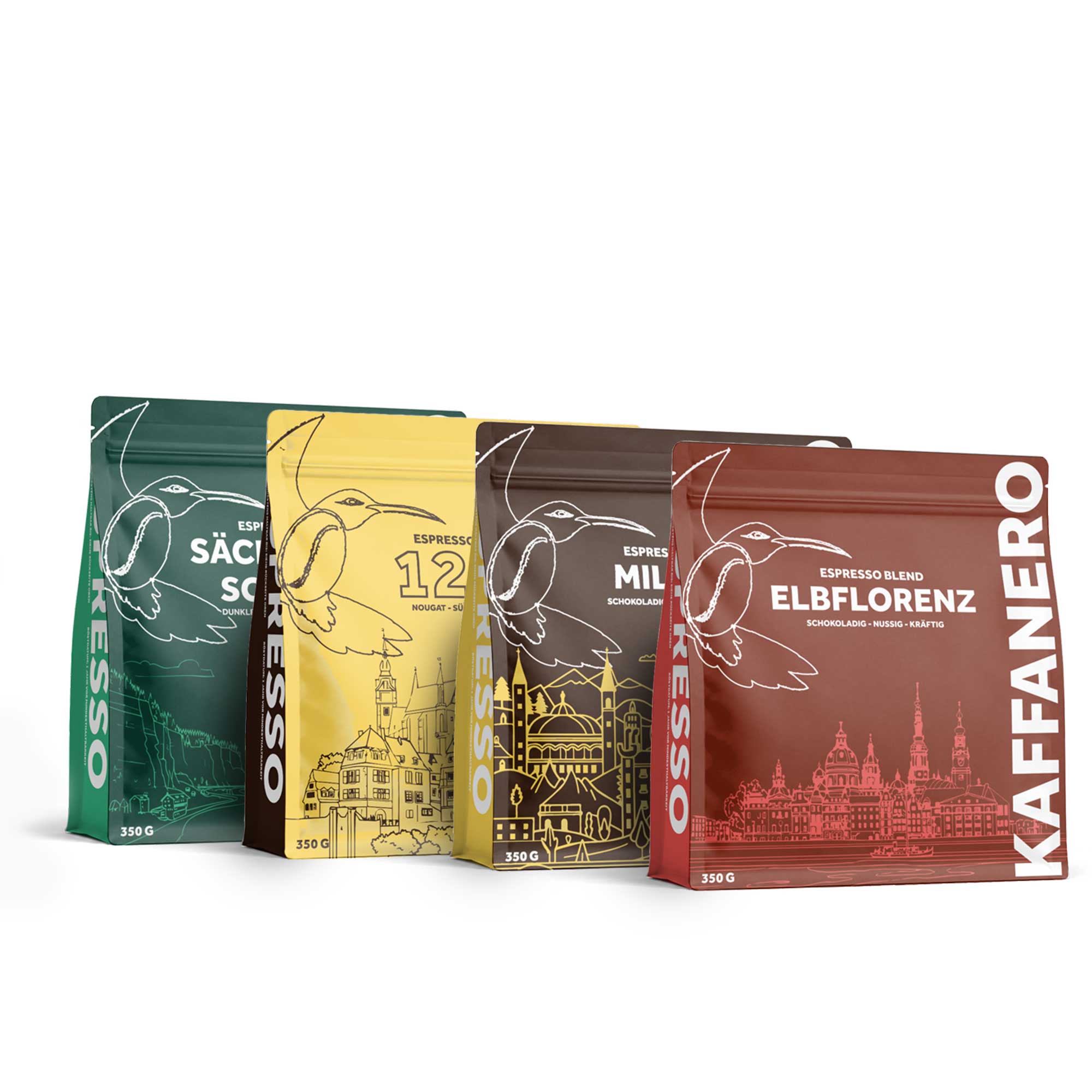
A Robusta content of 20–40% can significantly densify and stabilize the Robusta crema. Sensorially, Robusta often brings more body, earthy and nutty notes, and a stronger bitterness. Arabica, in contrast, often provides more acidic structure and complex sweetness. The right blend depends on the desired profile: For traditional, crema-rich espressos, a moderate Robusta content is common, as in our Espresso Elbflorenz or Espresso Milano; for fruit-forward Third Wave profiles, it's usually lower.
- More crema and stability with Robusta
- More body, often less floral complexity
- In milk drinks, robust-powerful crema often works harmoniously
How to get a beautiful, stable crema
With a few consistently applied measures, crema can be visibly improved – especially with a portafilter machine. Here are the most important adjustment screws.
Recipe Recommendation: 18g in, 36g out, 25–30s
- Dose: 18g in the appropriate basket (adjust to 16–20g if necessary)
- Output: 36g espresso (1:2 Brew Ratio) in 25–30 seconds
- Stop extraction by mass, not by volume
- For too light crema: Grind finer or slightly reduce ratio
- For too dark, bitter crema: Grind coarser or slightly increase ratio
Water Quality, Temperature (90–95 °C), and 9-bar Pressure
- Water: 50–150 mg/l total hardness, moderate bicarbonate (KH 40–80 mg/l) for stable extraction and crema
- Temperature: 90–95 °C; lighter roasts generally higher, darker roasts generally lower
- Pressure: Around 9 bar at the puck; a stable pump and clean lines help
- Pre-infusion: 2–6 seconds can stabilize flow and reduce channeling
Puck Preparation: WDT, Leveling, Tamping

- WDT (Weiss Distribution Technique): Break up clumps, distribute evenly – less channeling, more homogeneous crema
- Leveling: Evenly align the surface so water doesn't preferentially flow on one side
- Tamping: Straight, repeatable, approx. 10–15 kg; pressure consistency is more important than the absolute number
- Filling the basket: a too full basket presses against the shower screen and disrupts flow
Grinder, Portafilter, and Cleaning/Maintenance
- Grinder: Fine adjustment, low retention, sharp burrs – prerequisite for reproducible espresso grind size
- Machine: Clean shower screens and portafilters; old coffee oils destroy crema and aromas
- Regular backflushing and descaling, as well as checking seals
- Scale and timer: Control over brew ratio and time
Troubleshooting: Common Crema Problems and Solutions
Thin, watery crema
- Grind too coarse: Adjust finer, aim for 25–30s
- Ratio too high: Go back from 1:2.5 to 1:2
- Beans too old: Roast fresher or use Robusta content
- Low temperature/pressure: Check for 90–95 °C and approx. 9 bar
- Channeling: Improve puck preparation (WDT, leveling, tamping)
Very dark, bitter crema
- Grind too fine: Slightly coarser, stabilize flow
- Ratio too low: Increase from 1:1.8 to 1:2
- Temperature too high: Reduce by 1–2 °C
- Over-extraction: Reduce flow time, repeat puck preparation
- Very dark roast: Try a lighter profile
Hardly any crema in a super-automatic machine
- Freshness: Use fresher beans; old coffee yields little crema
- Grind size: As fine as the super-automatic allows, without overflowing
- Cleaning: Regularly clean brewing group, sieve, and spouts
- Temperature/pressure: Check device settings; factory settings are often conservative
- Blend: A moderate Robusta content increases crema stability
Seasonal Tip: Stable Crema for Iced Espresso & Summer Drinks
Cold temperatures cause crema to collapse faster, and ice further dilutes it. Here's how to keep it looking good longer:
- Pre-chill glass, use large and clear ice cubes (slower melting)
- Shot first: Extract espresso first, then pour over ice and serve immediately
- Slightly reduce ratio (e.g., 1:1.8) for more intensity against dilution
- Use a Robusta-containing blend for denser crema
- Add sugar syrup to the glass before the shot, so stirring doesn't destroy the crema
Conclusion and next steps: First adjust the recipe (1:2, 25–30s), then the grind size, then water and puck preparation. Note small changes and compare systematically. For in-depth reading, topics like extraction chemistry, water treatment for espresso, and grinder geometry are suitable.