
Filters
7 products
How to Find the Perfect Coffee Beans
Roast level explained: Why darker roasts are ideal for espresso machines
Espresso is extracted under pressure and in a short amount of time. That's why espresso beans need a roast profile that provides enough sweetness, body, and solubility. Darker or more developed roasts are particularly well-suited for this, as they extract more evenly and exhibit less sharp acidity. The result in the cup is more fullness, more crema, and a more intense mouthfeel.
Light roasts can be exciting in an espresso machine but are significantly more demanding. They often bring fruity, floral, and acidic aromas, require very precise settings, and are more sensitive to grind size, temperature, and extraction time. If a light roast is not optimally extracted, the espresso quickly tastes sour, thin, or unbalanced. For classic espresso drinks and milk-based beverages, the strong body is often missing.
Medium to darker espresso roasts, on the other hand, provide a more stable and accessible cup profile. They often taste of chocolate, nuts, nougat, caramel, cocoa, or spices. The sweetness is more pronounced, the acidity appears softer, and the espresso remains present even in milk-based drinks. This is precisely why espressos for portafilter machines are usually roasted darker than filter coffees.
The lighter the roast, the fruitier, clearer, and more acidic the espresso. The darker and more developed the roast, the stronger, more chocolatey, creamier, and more classic the cup profile will be.
How to prepare it
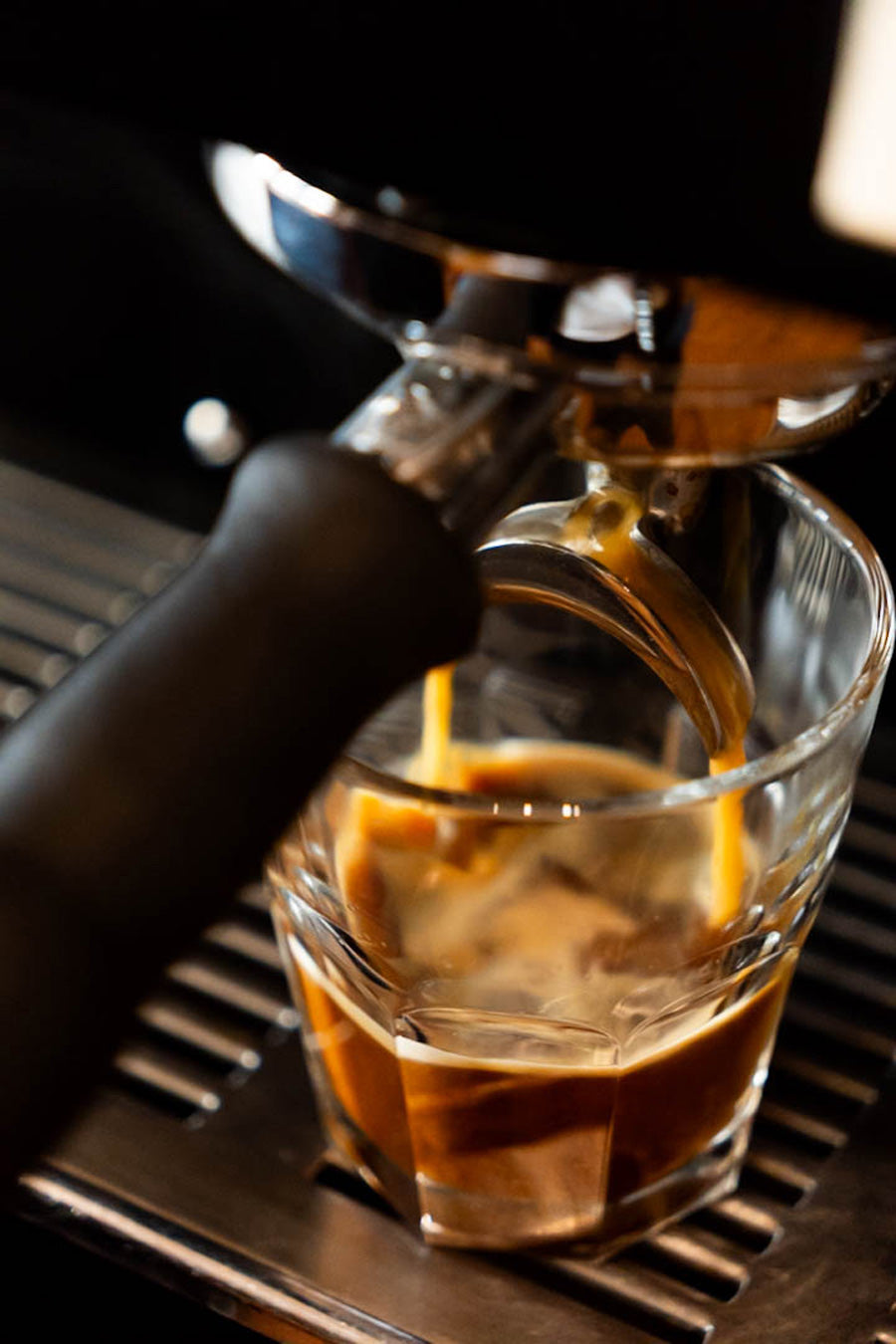
The Perfect Espresso from Your Portafilter Machine
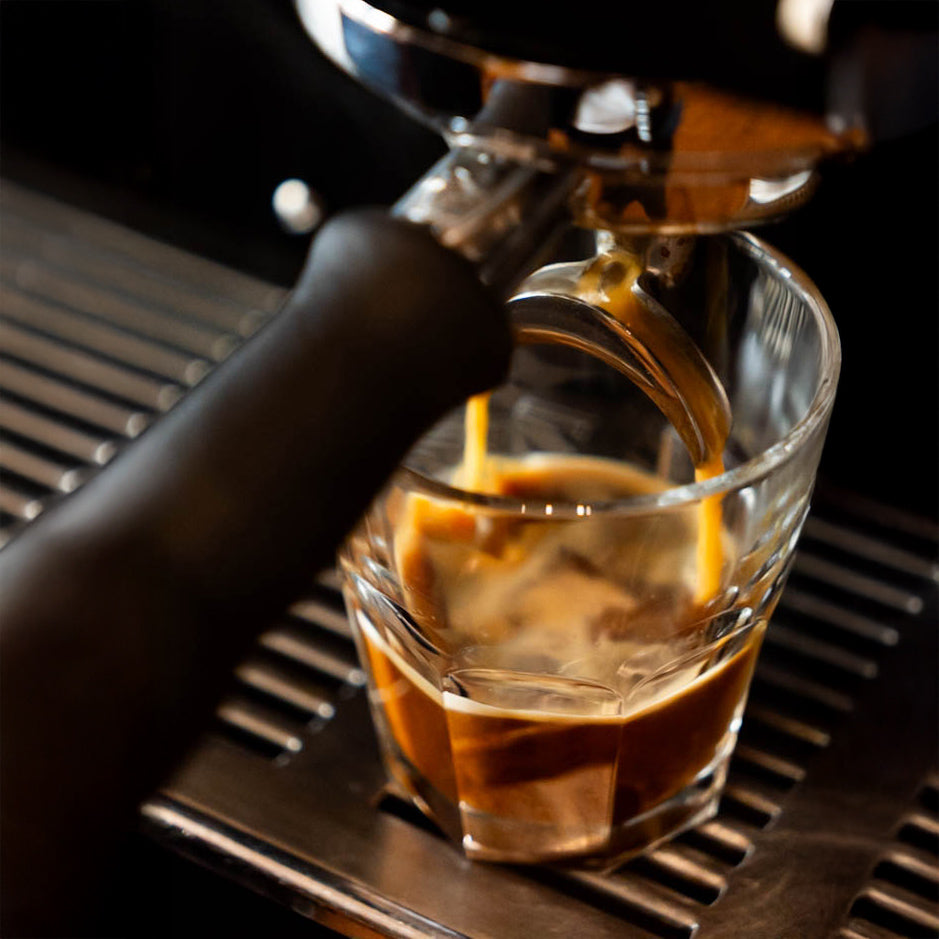
For the perfect espresso preparation in a portafilter, grind size, dosage, brew ratio, extraction time, and even extraction are key. A good starting point is a brew ratio of 1:2. This means: From 18 grams of ground coffee, you get about 36 grams of espresso in the cup. The extraction time is ideally about 25 to 30 seconds.
These values are not set in stone, but a starting point. For a stronger, denser espresso, you can extract a bit shorter, for example with a ratio of 1:1.8. For more clarity, sweetness, and balance, a longer ratio of 1:2.2 can be useful. The important thing is to always adjust to taste and not just to numbers.
The grind size should be fine, but not so fine that the espresso merely drips. If the espresso flows too quickly and tastes sour, thin, or watery, the grind size is usually too coarse. In that case, you should grind finer. If the espresso flows too slowly and tastes bitter, dry, or over-extracted, the grind size is usually too fine. In that case, you should grind a little coarser.
Also, make sure to distribute the ground coffee evenly in the basket and tamp cleanly. Uneven distribution leads to channeling: The water finds individual paths through the coffee bed instead of extracting evenly. The result is an espresso that can taste both sour and bitter. Good preparation ensures more sweetness, balance, and crema.
How to get the most flavor out of your filter coffee
Brew Ratio Explained
The brew ratio describes the relationship between the amount of coffee grounds used and the finished espresso. A ratio of 1:2 means that you extract approximately 36 grams of espresso from 18 grams of coffee grounds. This setting is an excellent starting point for many espressos because it balances body, sweetness, and intensity well.
A Ristretto with a shorter ratio, for example 1:1.5, tastes denser, stronger, and more concentrated. The texture is fuller, the acidity lower, but the aromas can appear more compact. A classic espresso with 1:2 offers a balance of intensity, sweetness, and clarity. A longer extraction with 1:2.5 often tastes somewhat lighter, clearer, and more transparent, but it can also become bitter or thin if set incorrectly.
For milk-based drinks, the espresso can be extracted a little stronger. A dense, chocolatey espresso stands out better against milk or milk alternatives in a cappuccino or flat white. For pure espresso, it is worthwhile to fine-tune and adapt the ratio to the respective cup profile.
If your espresso tastes sour, grind finer, increase the temperature, or slightly lengthen the extraction. If it tastes bitter, grind coarser, shorten the extraction, or reduce the temperature. If it tastes flat, check the freshness of the beans, the dosage, and the even distribution in the portafilter.
From classically chocolatey to modern and fruity
The right Kaffanero espresso for every portafilter
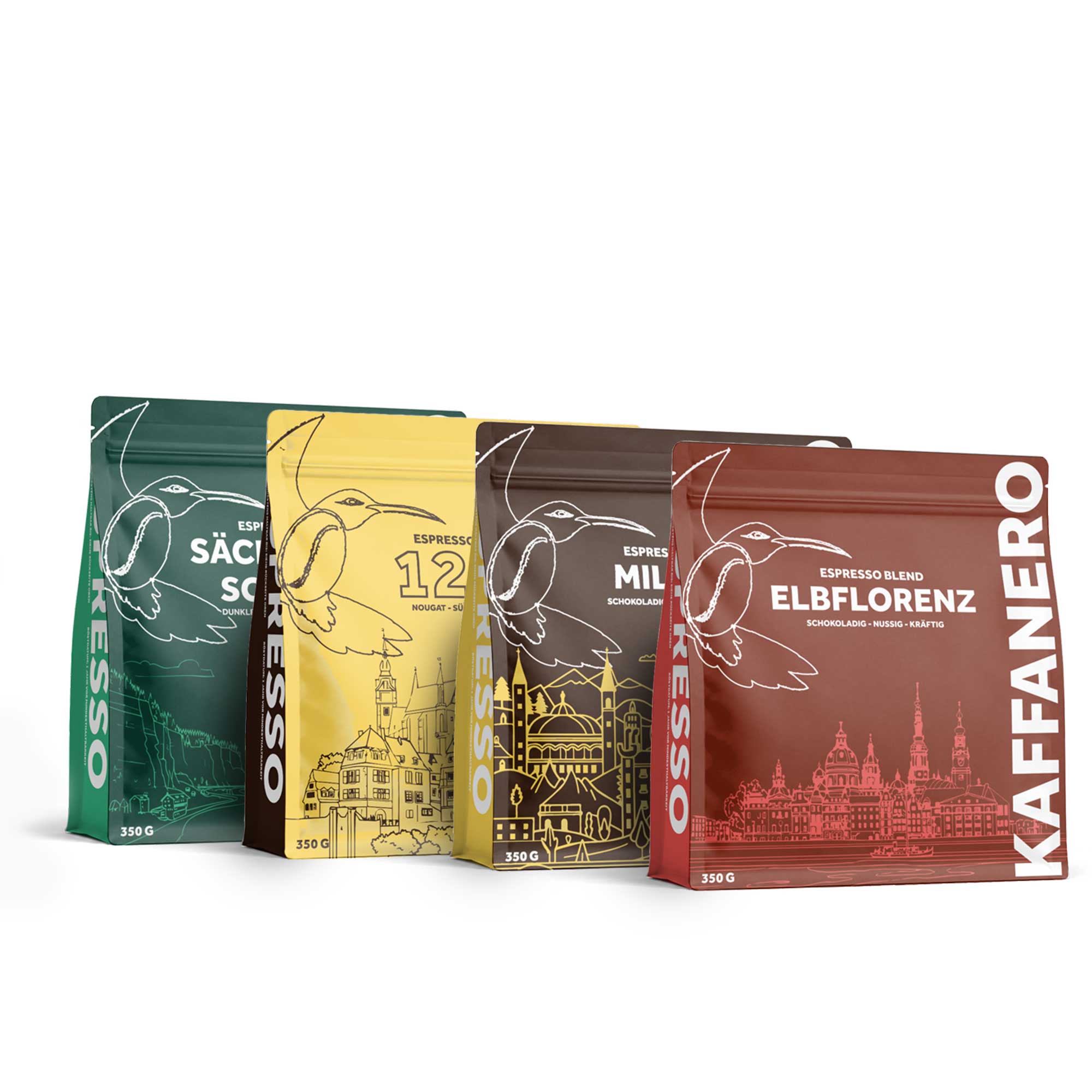
Kaffanero espressos are specially developed for pressure brewing and are ideal for portafilter machines. The roasts bring body, sweetness, and balance without tasting burnt or flat. Whether you're looking for a classic espresso, a soft all-rounder, or a fruitier profile: In the Kaffanero Espresso collection, you'll find suitable beans for your machine and your taste.
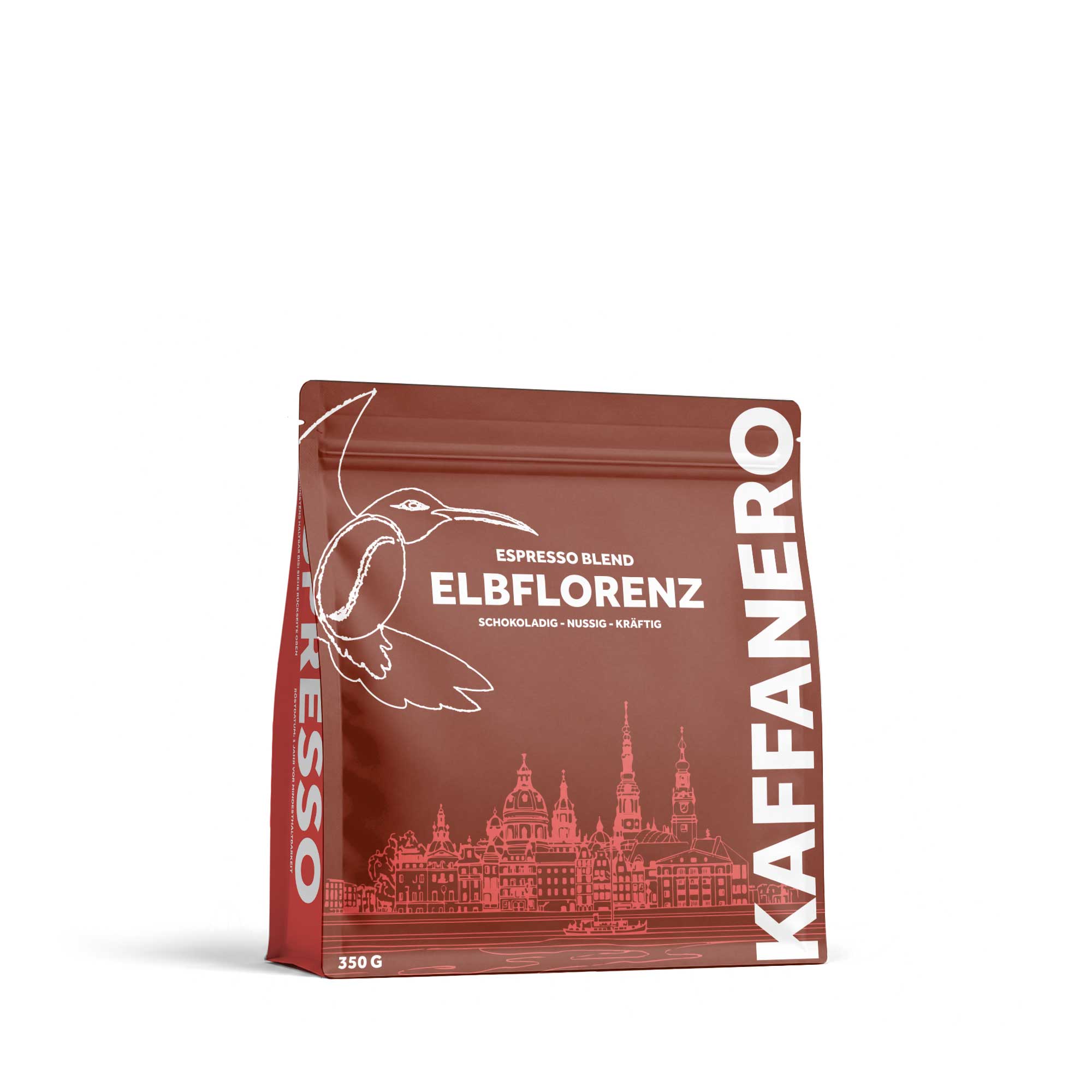
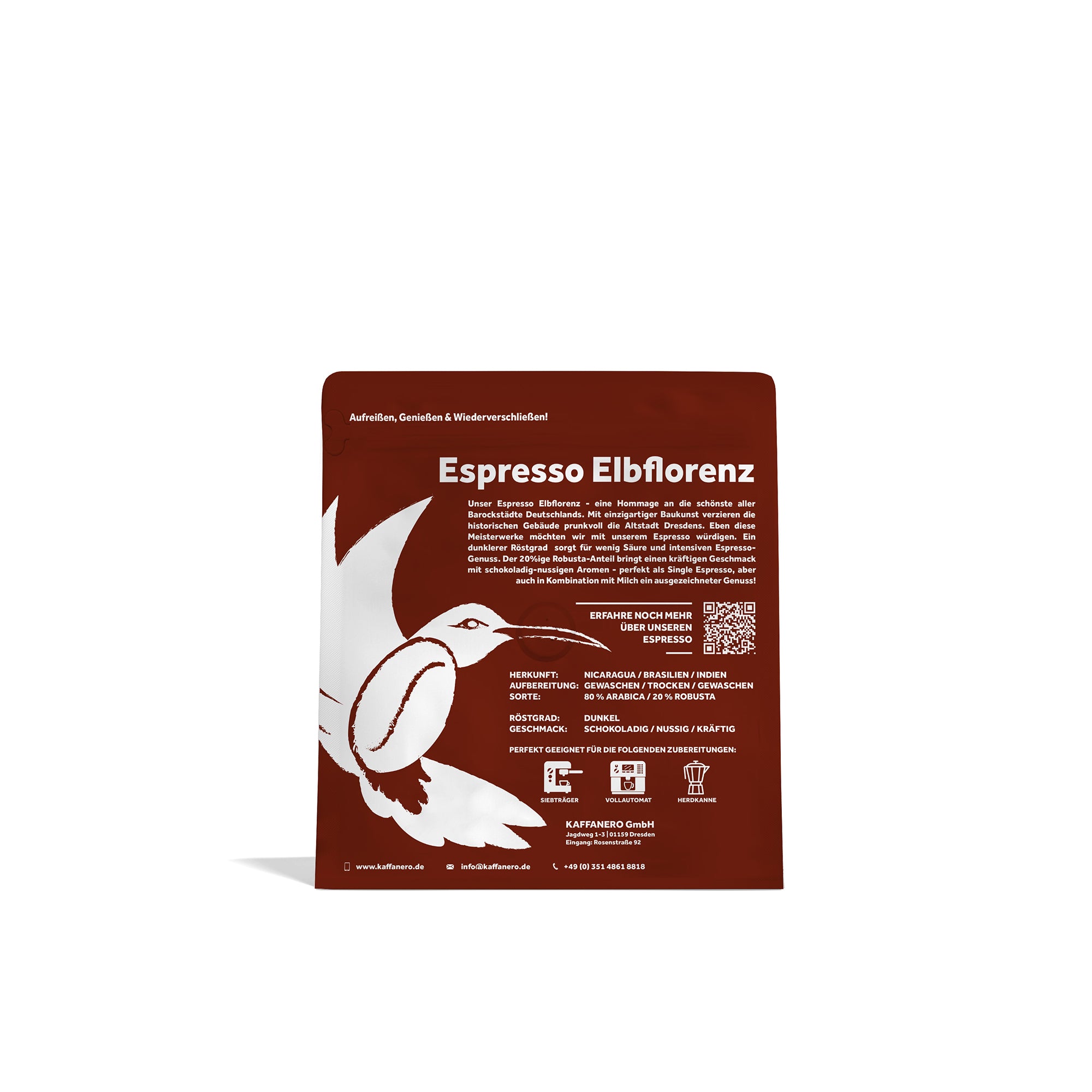
Espresso Elbflorenz is the right choice for those who like it classic, strong, and chocolatey-nutty. Its darker roast profile is particularly well-suited for portafilter machines, fully automatic machines, and stovetop pots. In the cup, it shows an intense aroma, creamy mouthfeel, and a smooth taste. This profile comes into its own particularly harmoniously when combined with milk or milk alternatives.
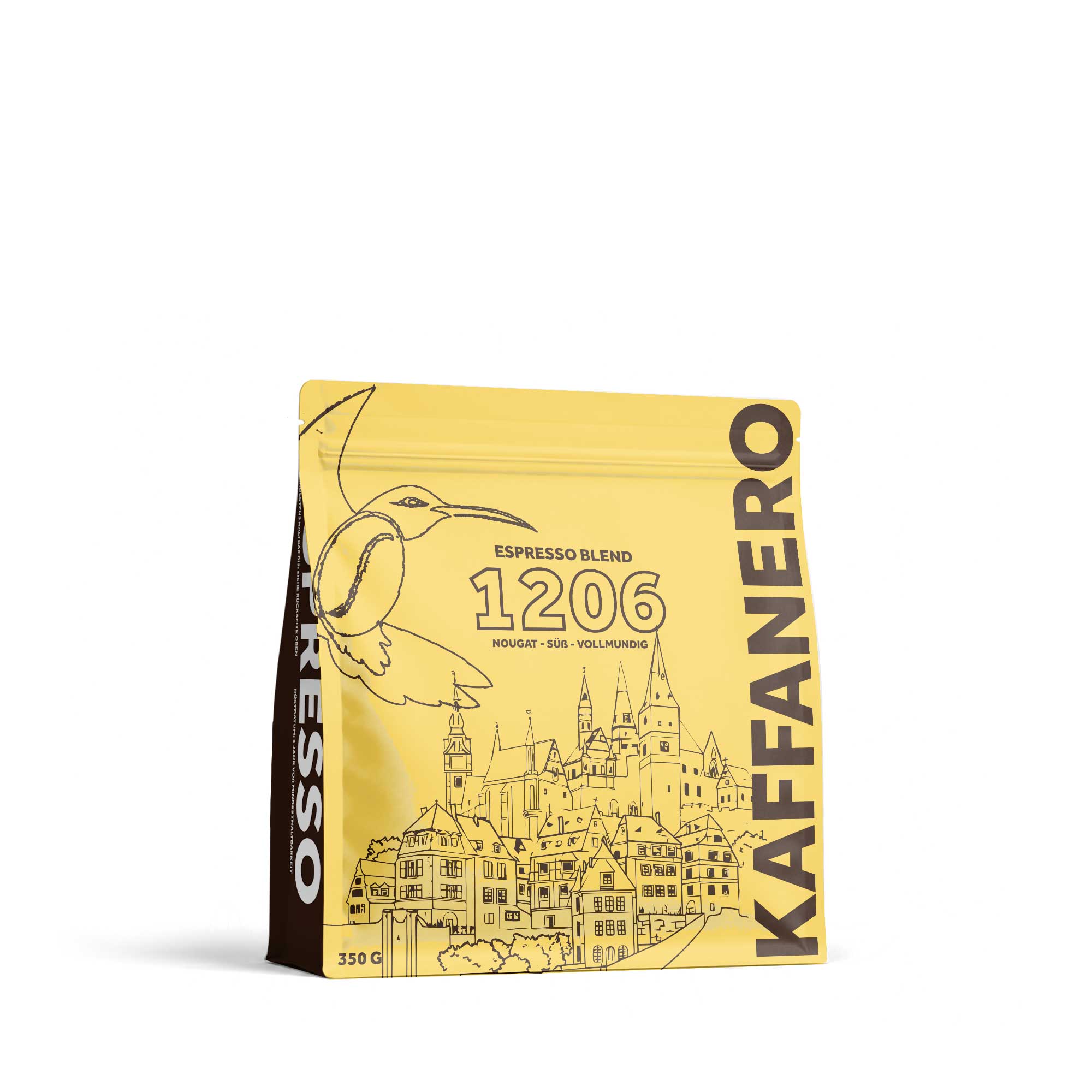
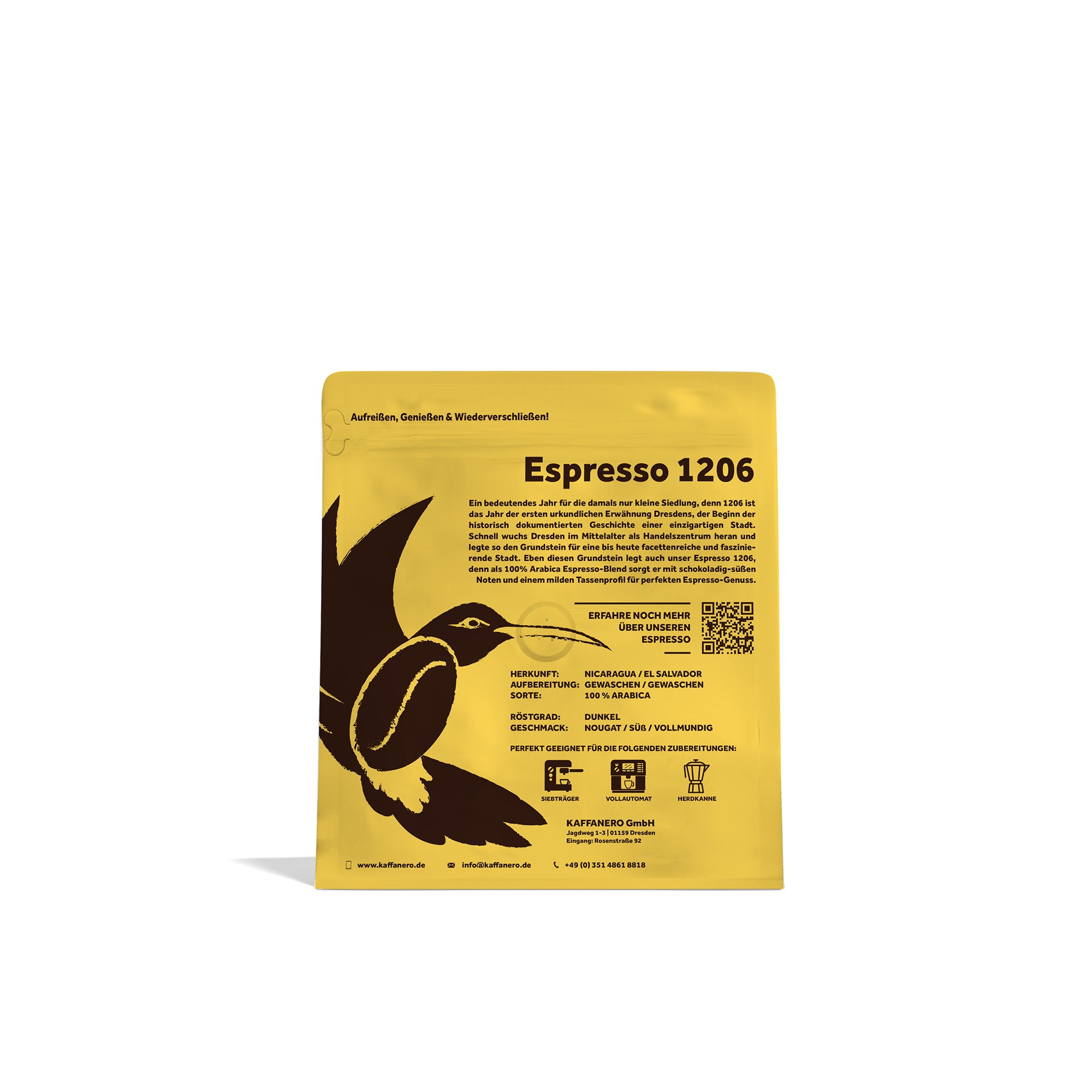
Espresso 1206 is a soft, round espresso with a sweet, full-bodied character and intense nougat notes. It is very suitable as a single espresso, but also works excellently in cappuccino, flat white, or latte macchiato. Those looking for a mild, sweet, and accessible espresso will find an ideal introduction here.
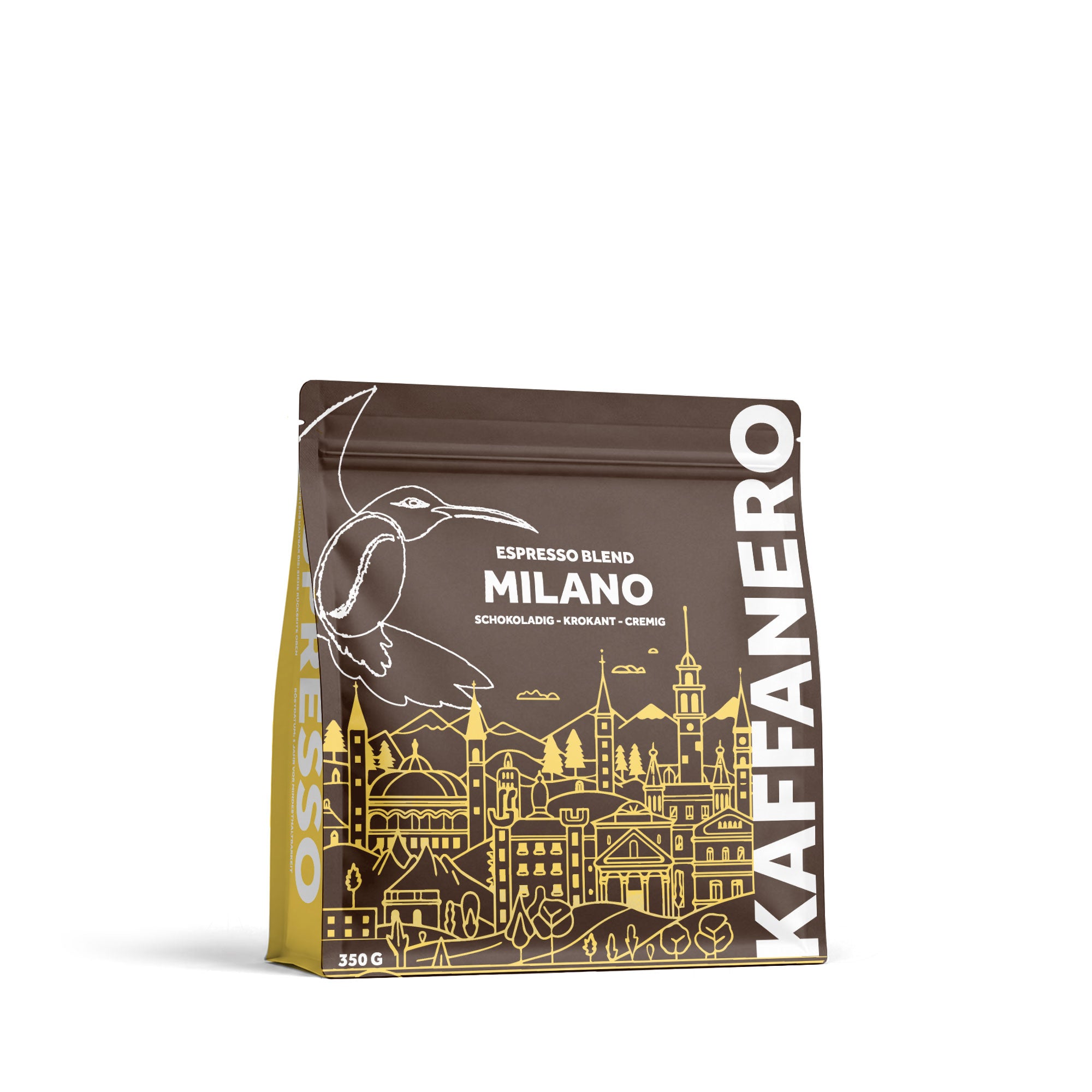
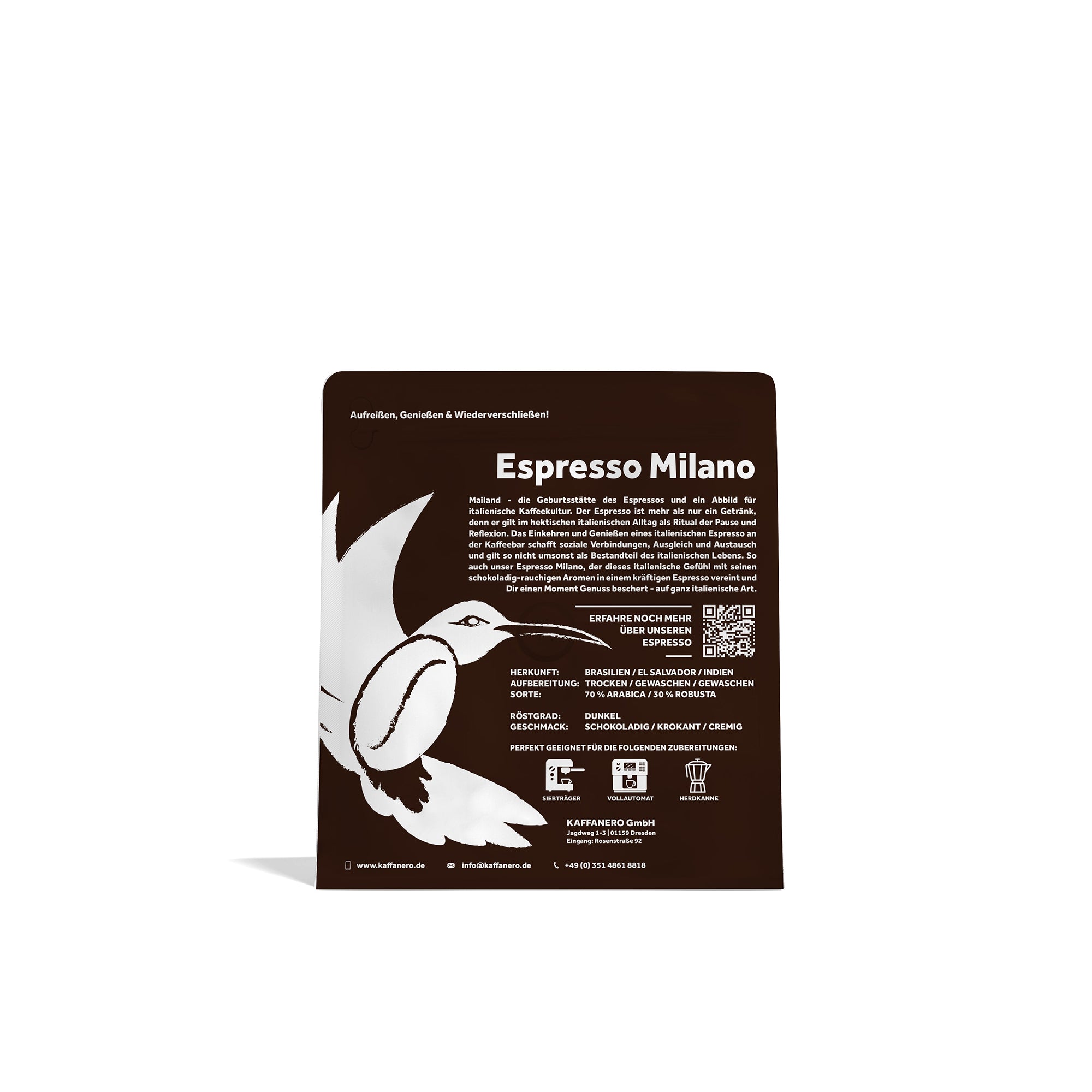
Espresso Milano represents a harmonious blend profile from Brazil, El Salvador, and India. It is very suitable for all those seeking a classic, balanced espresso with an Italian touch. The cup profile is round, strong, and pleasantly full-bodied – ideal for daily espresso and for milk-based drinks.
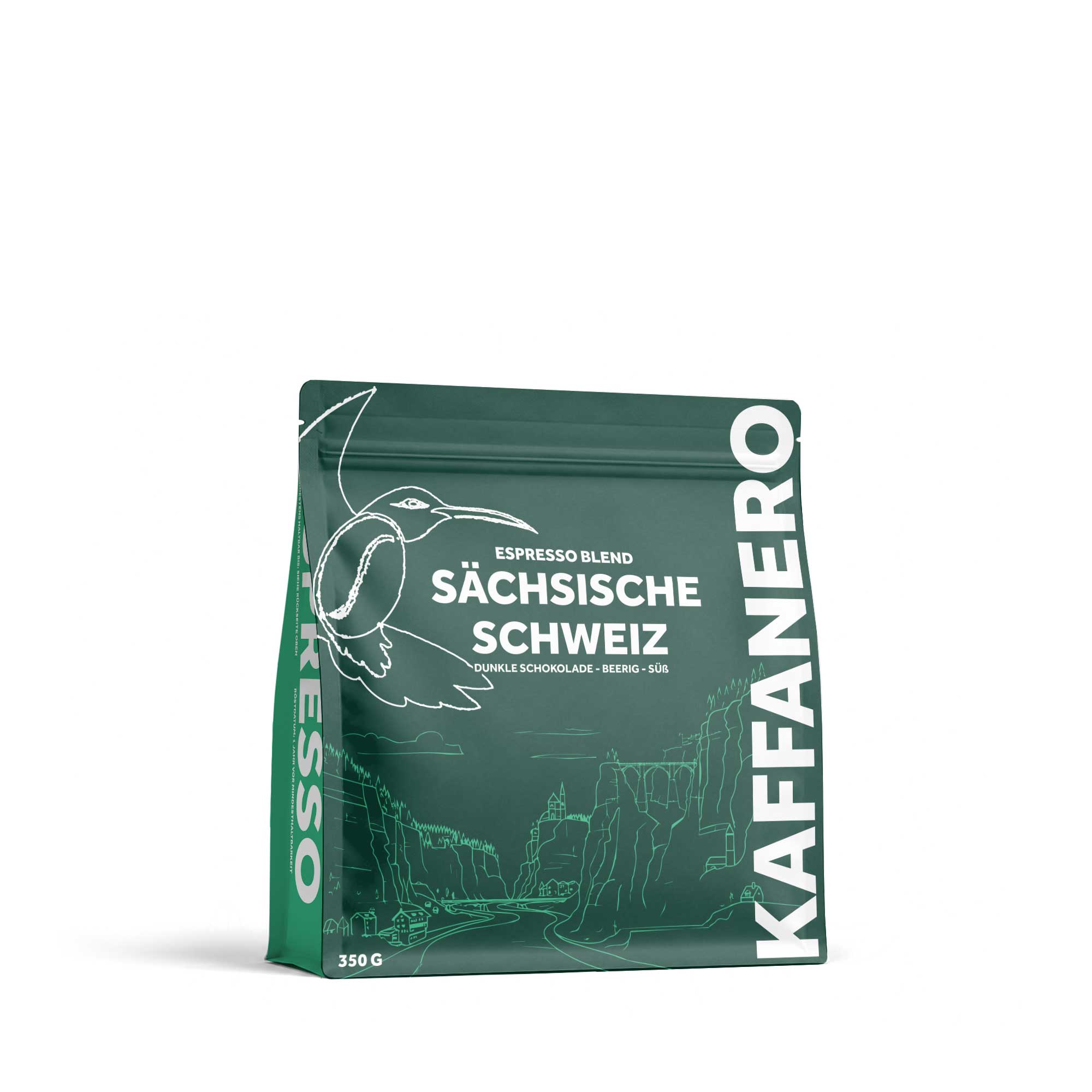
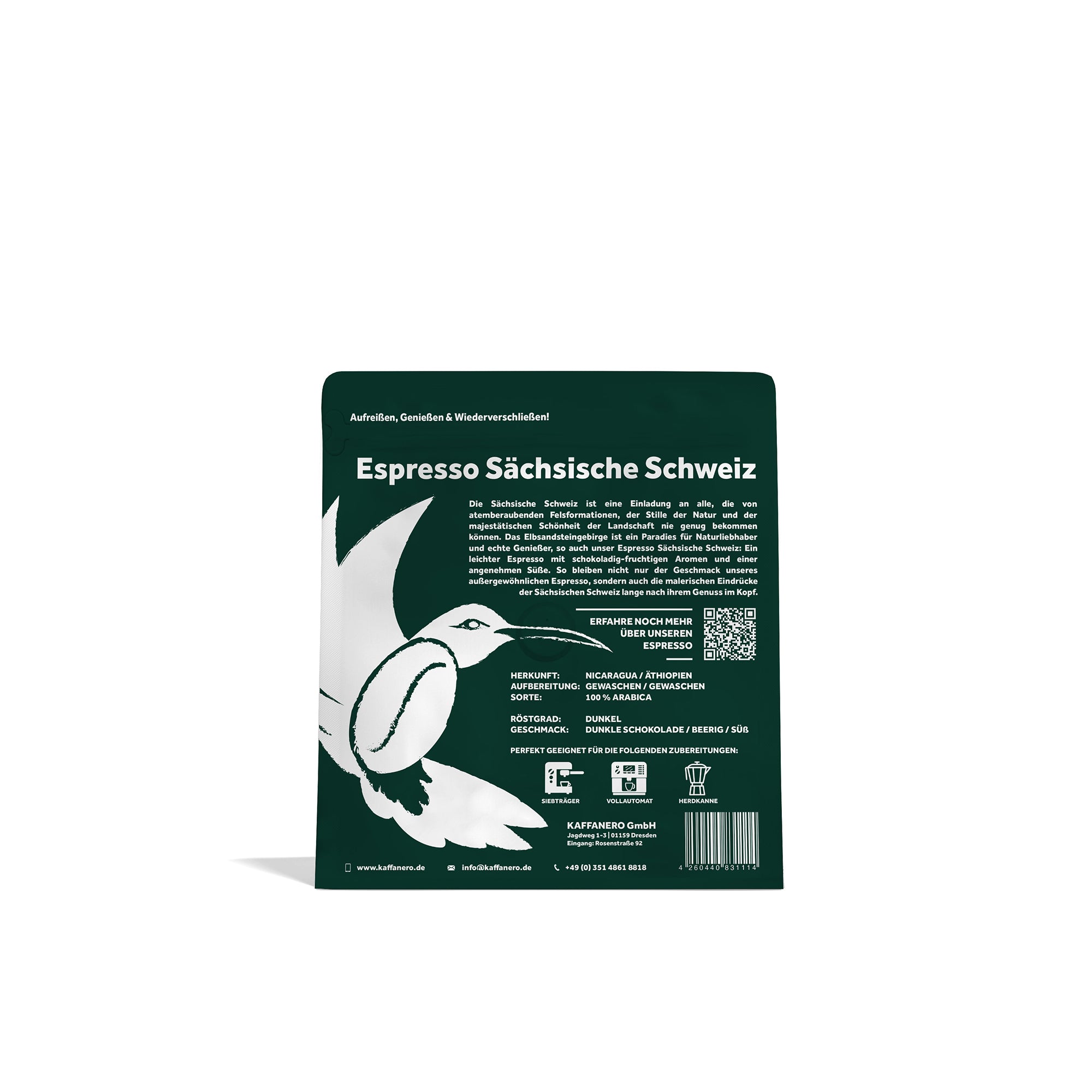
Espresso Sächsische Schweiz is the right choice if you prefer your espresso a little fruitier and more modern. It brings more aromatic tension to the cup and is suitable for anyone who wants to discover fruity nuances in addition to chocolate and sweetness. In a portafilter, this profile can be particularly well extracted if the grind, brew ratio, and extraction time are precisely set.
If you want to try different flavors, the Espresso Tasting Set is ideal. It contains the four Kaffanero espressos: Espresso Milano, Espresso Elbflorenz, Espresso Sächsische Schweiz, and Espresso 1206. This way, you can directly compare which cup profile best suits your portafilter, your drinks, and your personal taste.
Whether classic strong, chocolatey-nutty, soft-nougat, or fruity-modern: With Kaffanero espressos, you'll find the right bean for precise preparation, full crema, and genuine espresso enjoyment at home.