Coffee can taste sour or bitter; rarely is this due to "bad coffee" alone. Usually, several factors come together: grind size, brewing time, water temperature, roast level, water quality, and preparation method. The good news: in most cases, the taste can be significantly improved with a few targeted adjustments.
This guide will help you narrow down the cause and correct your preparation step by step – whether you use a pour-over, French Press, automatic machine, or espresso machine for brewing.
Why coffee tastes sour or bitter: the most common causes
Coffee naturally contains acids, bitter compounds, sweetness, and many volatile aroma compounds. When brewing, these substances do not dissolve simultaneously. First, acids and fruity notes dissolve, then sweetness and body, and later more bitter and dry components.
If coffee tastes unpleasantly sour, this often indicates underextraction. The coffee was not leached sufficiently. If it tastes harsh, dry, burnt, or very bitter, overextraction is often at play. In this case, too many bitter components were extracted from the coffee grounds.
Important influencing factors are:
- Grind size: Too coarse often leads to sourness, too fine can cause bitterness.
- Contact time: Too short results in thin, sour cups; too long can taste bitter and heavy.
- Water temperature: Too cold extracts too little, too hot can intensify harsh bitterness.
- Roast level: Light roasts appear fruitier and more acidic, dark roasts stronger and more bitter.
- Cleaning: Old coffee oils in the machine, grinder, or pot quickly taste rancid and bitter.
Quick Diagnosis: Underextraction, Overextraction, Grind Size, and Water Temperature
Before you change everything at once, a simple diagnosis is worthwhile. Describe the taste as precisely as possible: Is the coffee sharp, lemony, thin, and short in the finish? Then underextraction is likely. Does it taste dry, fuzzy, burnt, medicinal, or very harsh? Then much points to coffee overextraction.
If coffee tastes sour: Grind finer, increase contact time, use slightly hotter water, or check if the roast is very light. A too low coffee dose in relation to water can also produce a thin, unbalanced cup.
If coffee tastes bitter: Grind coarser, shorten brewing time, slightly reduce temperature, or check if you are using a very dark roast. Bitterness can also come from old coffee oils, limescale, or too long a holding time.
Always change only one parameter and try again. This way, you quickly learn how grind size, temperature, and recipe affect your cup.
Pour-over and Manual Brewer: Correcting Sour or Bitter Taste
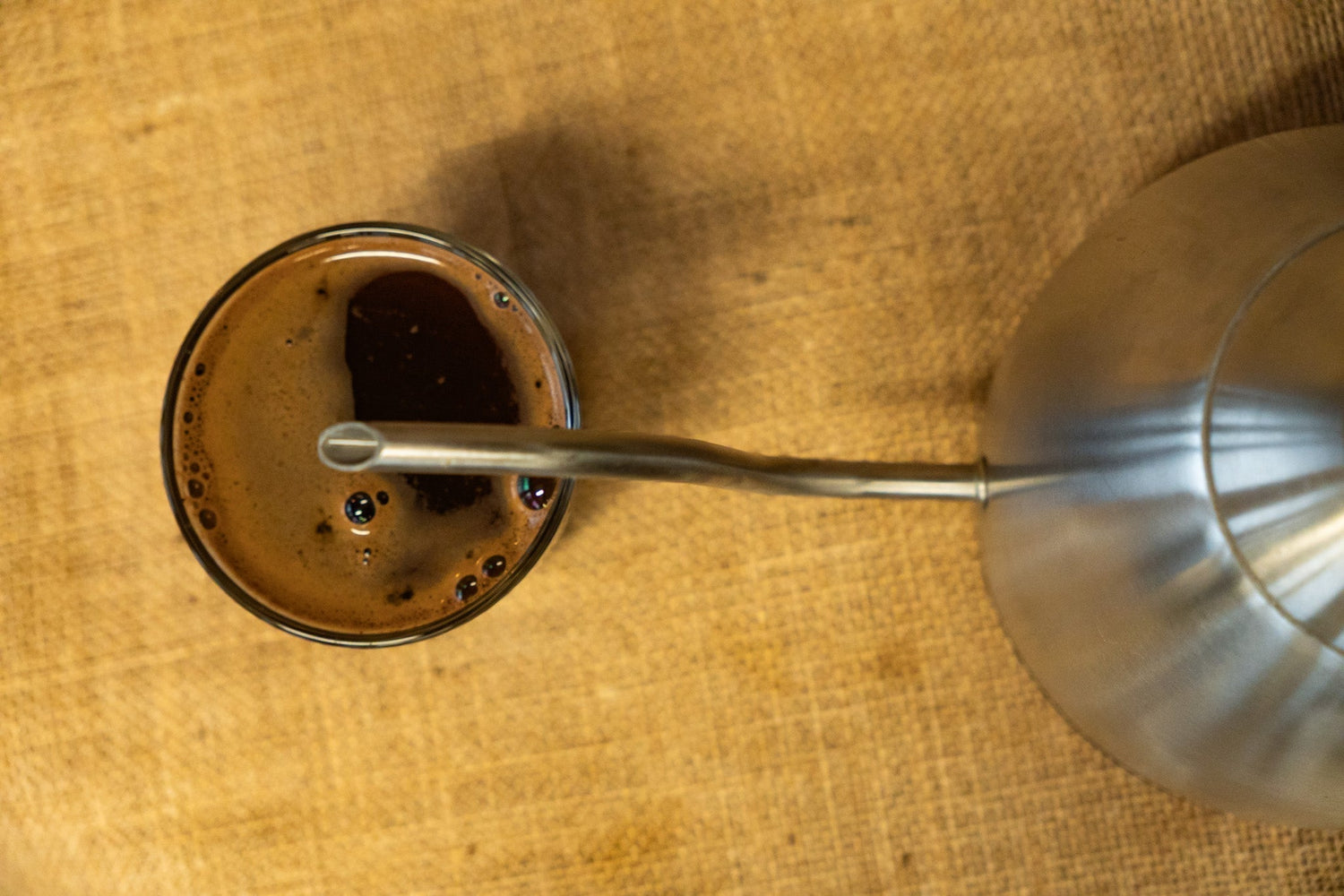
For manual brewers, the balance of grind size, water quantity, pouring technique, and brewing time is crucial. Pour-over coffee often tastes sour if the water flows through too quickly or the grind size is too coarse. Bitter pour-over coffee, on the other hand, often results from too fine grinding, too long brewing time, or uneven pouring.
A common starting recipe is about 60 grams of coffee per liter of water. For a 250 milliliter cup, that's about 15 grams of coffee. The brewing time, depending on the filter, grinder, and quantity, is usually between 2:30 and 4:00 minutes.

Adjust Grind Size, Brewing Time, Blooming, and Recipe
If your pour-over coffee tastes sour, adjust the grinder a little finer and pour more carefully. Make sure the entire coffee bed is evenly saturated. A bloom of 30 to 45 seconds helps CO₂ escape and makes extraction more even. For this, pour about double the amount of water in relation to the coffee quantity, for example, 30 grams of water for 15 grams of coffee.
If your pour-over coffee tastes bitter, grind a little coarser and avoid dripping for too long. If the water flows very slowly after the main pour, the grind size is usually too fine, or the coffee bed has been compacted by pouring too vigorously. Water significantly above 96 degrees Celsius can also increase bitterness.
Practical corrections:
- Sour: grind finer, brew hotter, extract longer.
- Bitter: grind coarser, brew shorter, slightly reduce temperature.
- Watery: use slightly more coffee or grind finer.
- Dull: use fresher beans and rinse filter paper.
Which Beans and Roast Levels are Suitable for Balanced Pour-Over Coffee
The roast level of coffee plays a significant role in pour-over. Light roasts emphasize fruit, floral notes, and lively acidity. This can be great but sometimes seems too sharp for beginners. Medium roasts often offer more balance of sweetness, body, and moderate acidity.
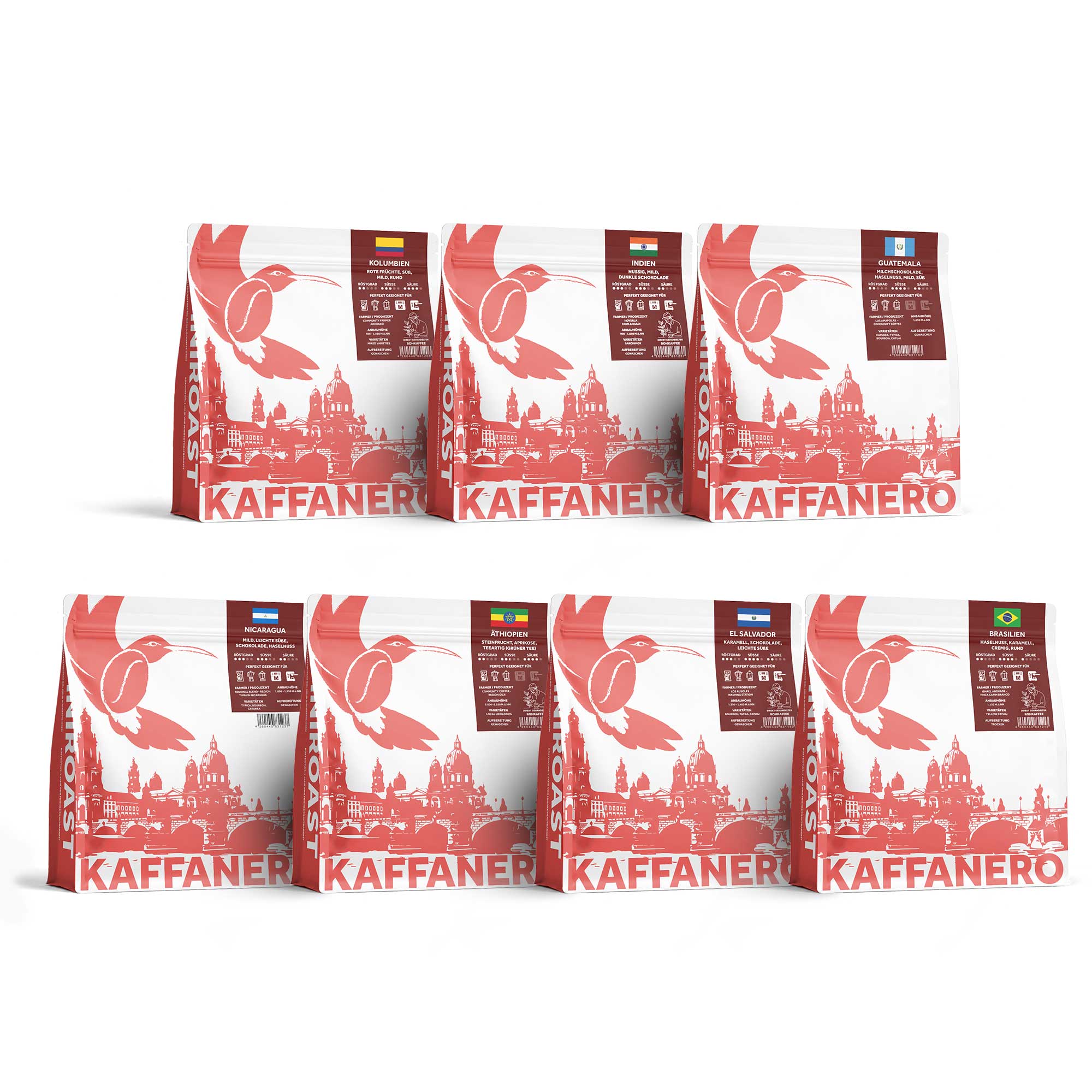
If you are looking for a balanced pour-over coffee, try one of our coffees. If you want to compare different profiles, you can test different growing countries with our World Tour Tasting Set and find out whether fruity, nutty, or chocolatey notes suit your taste better.
French Press: Typical Errors Causing Bitterness and Flat Taste
The French Press is straightforward, but it doesn't forgive everything. French Press becomes particularly bitter if the coffee is ground too finely, steeped for too long, or left on the grounds after pressing. Since no paper filter retains oils and suspended solids, the cup tastes stronger and fuller-bodied – but also becomes heavy or harsh more quickly.
A good starting point is 60 to 65 grams of coffee per liter of water, a coarse grind, and about 4 minutes of steeping time. Afterwards, you can carefully break the crust, stir, skim off foam and coarse particles, and slowly press down the plunger.
Correctly Control Steeping Time, Grind Size, and Stirring
If the French Press tastes sour or thin, the grind size was probably too coarse, or the steeping time was too short. Grind a little finer or extend the contact time in small steps. If it tastes bitter, dry, or muddy, grind coarser and pour the coffee directly into a separate carafe after pressing.
Avoid frantic stirring. Too much agitation can release fine particles that later appear bitter and sandy. Gentle stirring after pouring is usually sufficient.

Automatic Coffee Machine: Why Coffee Becomes Sour, Bitter, or Watery
With an automatic coffee machine, many parameters are automated but not unchangeable. Bitterness during preparation in an automatic machine often results from too fine a grind, too high coffee strength, a dirty brew group, or unsuitable beans. Sour coffee from an automatic machine, on the other hand, often indicates too coarse a grind, too low brewing temperature, or too short an extraction.
Watery coffee is also typical: The machine uses too little coffee grounds, the grind size is too coarse, or the selected beverage volume is too large for the set coffee strength.
Check Grind Size, Brewing Temperature, Coffee Strength, and Cleaning
Adjust the grind size only during the grinding process and always in small steps. If the coffee tastes sour, select a finer setting. If it tastes bitter or barely flows through, select a coarser setting. For sour coffee, try increasing the brewing temperature. For bitter coffee, a medium temperature might be more pleasant.
Cleaning is not a secondary issue for automatic coffee machines. Coffee oils settle in the brew group, spout, and milk system. They oxidize and produce rancid, bitter notes. Rinse the brew group regularly, descale according to the manufacturer's instructions, and occasionally dry-clean the bean container.
Bean Selection for Automatic Coffee Machines: Medium Roasts and Kaffanero Recommendations
The best coffee beans for automatic machines are usually medium to medium-dark roasts with a stable body, low acidity, and good crema. Very light filter roasts can quickly taste sour in an automatic machine, while very dark roasts can quickly taste bitter.
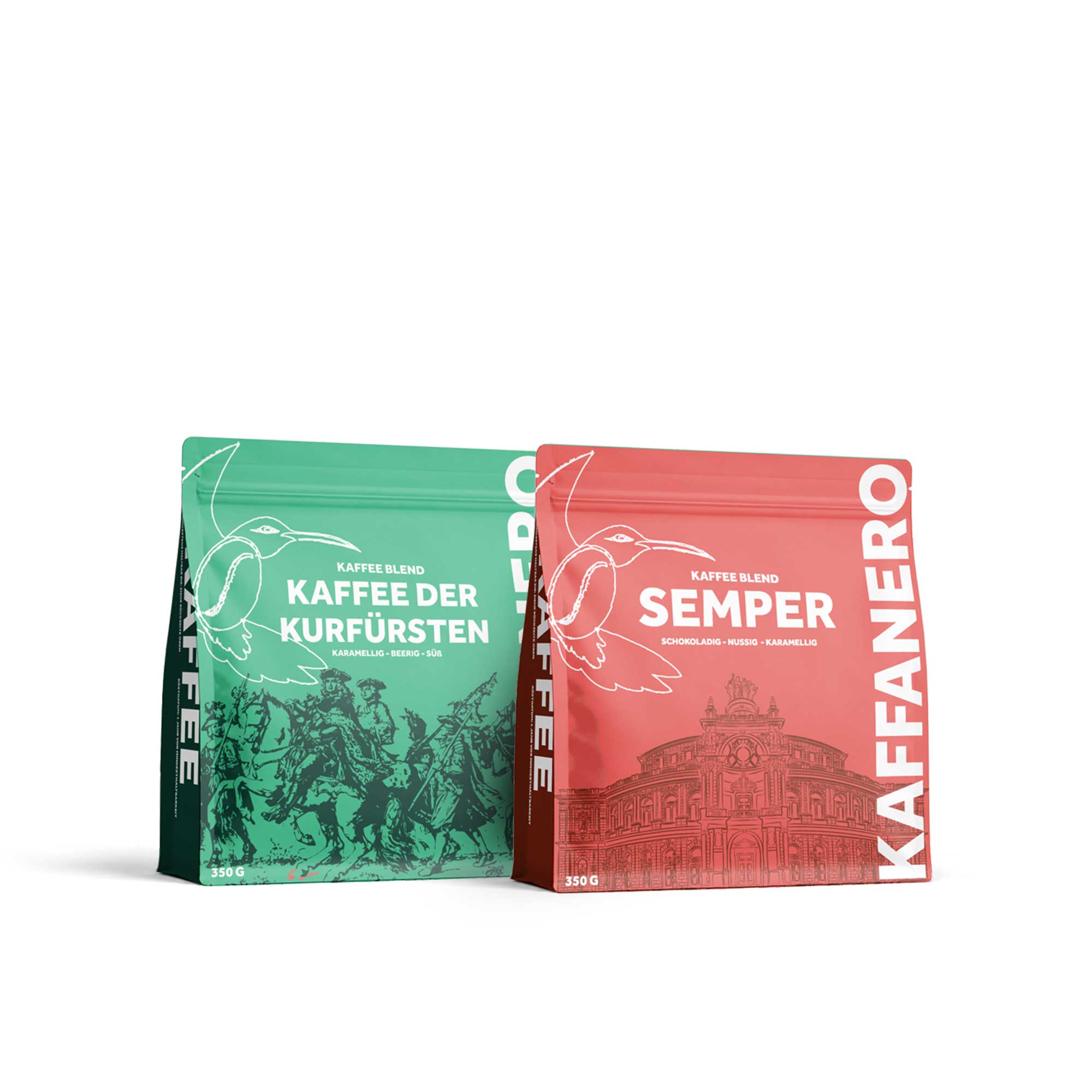
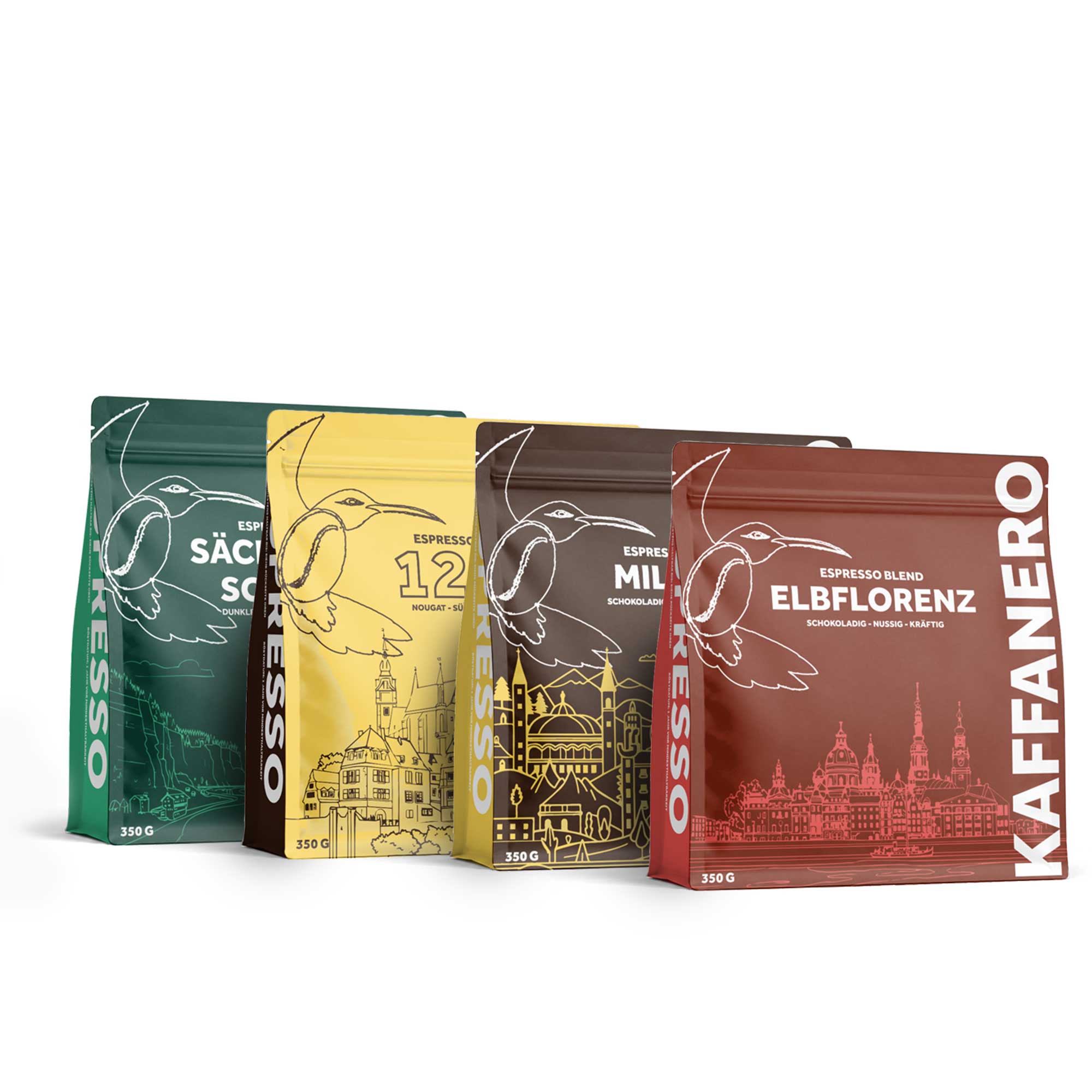
For cappuccino, café crema, and espresso-based beverages from an automatic machine, balanced beans are particularly pleasant. Our espresso roasts or the Kaffee Semper are particularly suitable for this.
Espresso Machine: Sour or Bitter Espresso? Shot Diagnosis Step by Step
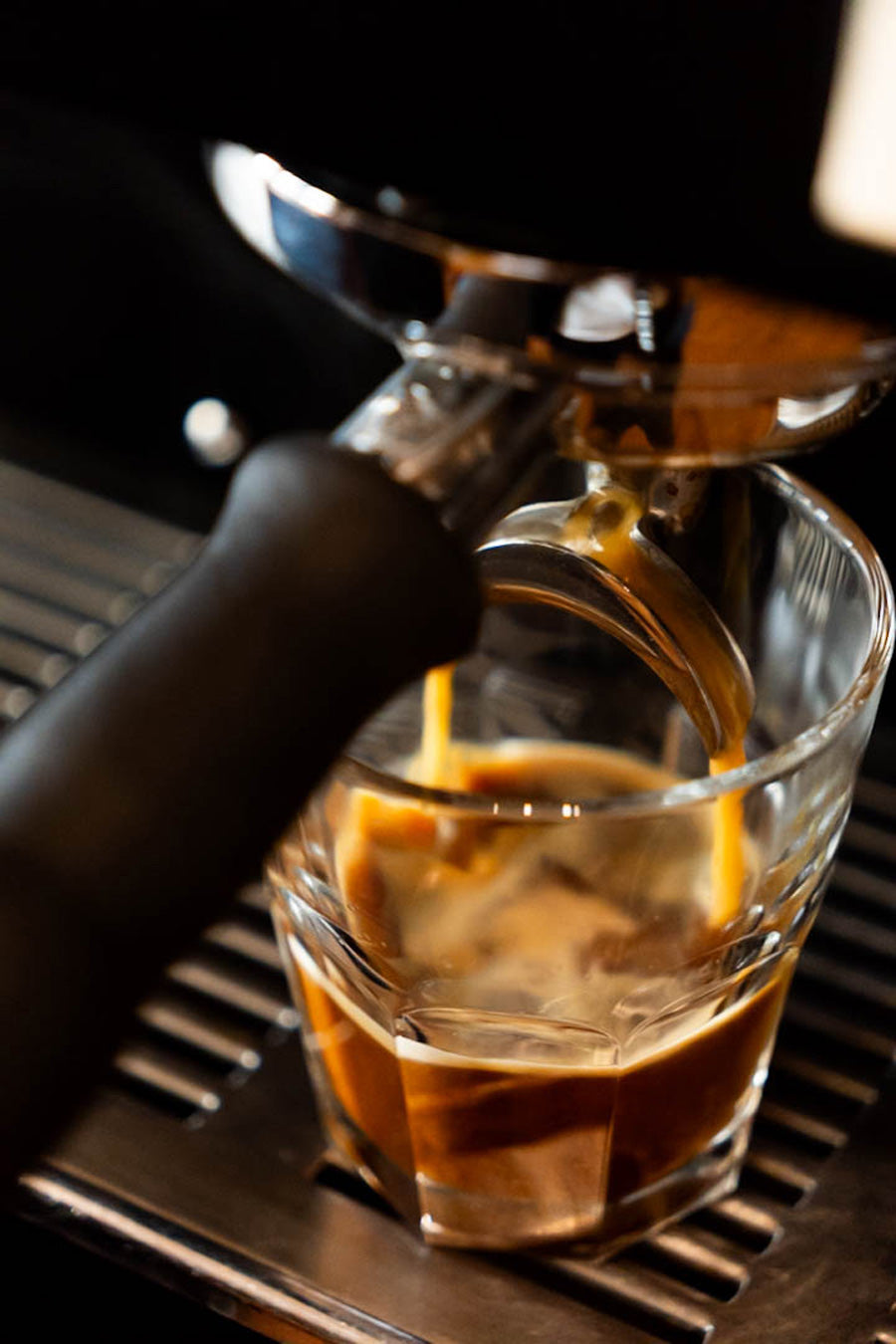
With an espresso machine, every small deviation shows immediately. Sour espresso is often a sign that the shot ran too fast or was underextracted. Bitter espresso, on the other hand, often results from too slow a shot, too fine a grind, too high a temperature, or channeling with localized overextraction.
A classic starting point is a brew ratio of 1:2: for example, 18 grams of coffee in the basket and 36 grams of espresso in the cup, extracted in about 25 to 30 seconds. This is not a rule, but a good reference point.
Extraction Time, Brew Ratio, Tamping, Channeling, and Roast Level
If the espresso runs through in 15 to 20 seconds and tastes sour, grind finer. Also, check the dose and distribute the coffee grounds evenly in the basket. Clumps, an uneven surface, or inconsistent tamping promote channeling. In this case, the water finds individual paths through the puck, while other areas remain underextracted.
If the shot runs very slowly, only drips, or tastes bitter and dry, grind coarser or slightly reduce the dose. For darker roasts, a slightly shorter brew ratio, for example 1:1.8, may be more pleasant. Light espresso roasts often require a bit more temperature, a longer ratio, and very precise distribution.
Water, Freshness, and Storage: Underestimated Factors for Better Taste
Water makes up the largest part of your coffee. Water that is too hard can dull flavors and emphasize bitterness. Water that is too soft can sometimes make coffee seem flat or sharp. For many preparations, medium-hard, fresh water is ideal. If your tap water is very hard, a suitable water filter can help.
Freshness also counts. Immediately after roasting, coffee still degasses; after a few weeks, it progressively loses aroma. For pour-over coffee, a few days to a few weeks after the roast date are often ideal; for espresso, it can be a bit longer depending on the roast. Store beans airtight, cool, dry, and dark – but not in the refrigerator, where moisture and foreign odors are problematic.
Grind coffee as fresh as possible. Already ground coffee quickly loses volatile aromas and can oxidize faster. The result then appears flat, old, or bitter, even if the preparation is correct.
Correction Guide: What to change if your coffee tastes sour or bitter
Use this short guide to make targeted adjustments:
- Coffee tastes sour: grind finer, extend brewing time, increase temperature, extract more evenly.
- Coffee tastes bitter: grind coarser, shorten brewing time, lower temperature, clean machine.
- Espresso sour: grind finer, extend extraction time, improve distribution in the basket.
- Espresso bitter: grind coarser, check ratio, lower temperature, rule out channeling.
- Automatic machine watery: increase coffee strength, reduce beverage volume, set grind finer.
- French Press bitter: grind coarser, steep for a shorter time, pour into another container after pressing.
The most important tip: Work systematically. Note grind size, coffee quantity, water quantity, temperature, and brewing time. This way, you will recognize patterns and find your personal recipe faster.