Today, if you want to buy coffee beans, you have countless options: supermarket, online shop, subscription, delicatessen, or a local roastery. For coffee connoisseurs, interested beginners, and long-time coffee drinkers, the local route is particularly worthwhile. This is because coffee is not a standardized product; it's a natural product with its own origin, processing, roast profile, and personal taste.
Therefore, buying coffee beans locally doesn't just mean shorter distances. It also means fresher goods, better advice, traceable origin, and the opportunity to experience coffee on-site. Small roasteries can often explain more precisely why a bean tastes fruity, chocolatey, mild, or strong – and which variety suits your brewing method.
Why local coffee beans are the better choice for many coffee drinkers
The biggest advantage of local roasteries lies in their proximity to the product. While industrially roasted coffee often undergoes long transport and storage times, in an artisan roastery, you usually get freshly roasted coffee beans with a clearly identifiable roast date. This is important because coffee degasses after roasting, and its aromas develop particularly harmoniously in the first few weeks.
Furthermore, there's the personal aspect. In a small roastery, you can describe how you drink your coffee: as an espresso, café crema, cappuccino, filter coffee, or French Press. Instead of generic recommendations, you receive advice that suits your equipment, your taste, and your daily routine.

Local coffee purchases are also a good way to shop more consciously. You learn which beans have just been freshly roasted, which origins are available, and why a certain coffee was light, medium, or dark roasted.
Industrial roastery vs. artisan roastery: the main differences
Industrial roasteries often work with very large quantities, standardized profiles, and high speed. This is efficient and ensures consistent mass-produced goods. An artisan roastery, however, usually takes a different approach: smaller batches, more sensory control, and more attention to the character of the green coffee.
Quality and freshness: why roast date, batch size, and storage are crucial
Freshness is not an empty promise when it comes to coffee. After roasting, the beans continuously change. Coffee roasted too recently can taste restless, while coffee that is too old loses fragrance, sweetness, and clarity. Local roasteries can usually tell you exactly when a batch was roasted and when it will be ideally drinkable.
Smaller batches have the advantage that they can be sold and re-roasted more quickly. This means the coffee doesn't sit on the shelf for months. Storage is also more transparent: airtight, cool, dry, and protected from light as much as possible. If you want to buy coffee beans locally, you can check and inquire about such points directly on-site.
Taste and variety: more origin, more roast profiles, more character in the cup
Coffee tastes very different depending on its origin, variety, processing, and roasting. A coffee from Brazil can seem nutty and chocolatey, an Ethiopian coffee floral and citrusy, a Central American coffee balanced with a delicate sweetness. Small roasteries often highlight these differences more clearly because they don't try to force every coffee into a uniform mass taste.
This opens up more variety: espresso roasts with a strong body, light filter roasts with clear acidity, balanced all-rounders for automatic machines, or seasonal specialties. If you enjoy trying coffee, you'll often find better guidance locally than by blindly grabbing a package from a shelf.
Transparency and sustainability: understanding where the coffee comes from and how it's roasted
Transparency begins with simple questions: Which country does the coffee come from? From which farm, cooperative, or region? How was it processed? Which roast was chosen and why? Local roasteries can often explain this information in a comprehensible way.
Sustainability also becomes more tangible. It's not just about seals, but about purchasing policies, fair trade relationships, conscious packaging, short supply chains, and avoiding unnecessary inventory. Those who regularly shop at a local roastery also support regional craft businesses and receive a product with more history in return.

Taste on-site instead of buying blind: how to find the right beans for your preparation method
Many bad purchases happen because coffee is bought without context. A bean that tastes excellent as an espresso might be too heavy in a filter. A fruity filter coffee might appear too sharp in a fully automatic machine. That's why on-site advice is so valuable.
Advice for portafilter, automatic machine, filter coffee, and French Press
For portafilters, beans are often sought that provide a stable crema, good sweetness, and sufficient body. Coffee beans for portafilters can be classically chocolatey, nutty, or more modernly fruity, depending on taste. It is important that the roast level and recipe match.
Coffee beans for automatic machines should often be a bit simpler: not too light roasted, pleasantly round, and easily extractable. For filter coffee, lighter to medium roasts are often suitable, where clarity, fruit, and delicate sweetness are paramount. The French Press, in turn, benefits from beans with body and a soft texture.
- Portafilter: Espresso roasts with a balance of sweetness, body, and delicate acidity.
- Automatic machine: round, forgiving beans with little bitterness.
- Filter coffee: clear, aromatic roasts with origin character.
- French Press: full-bodied coffees with pleasant depth.
Asking questions: grind size, recipe, roast level, and water as success factors
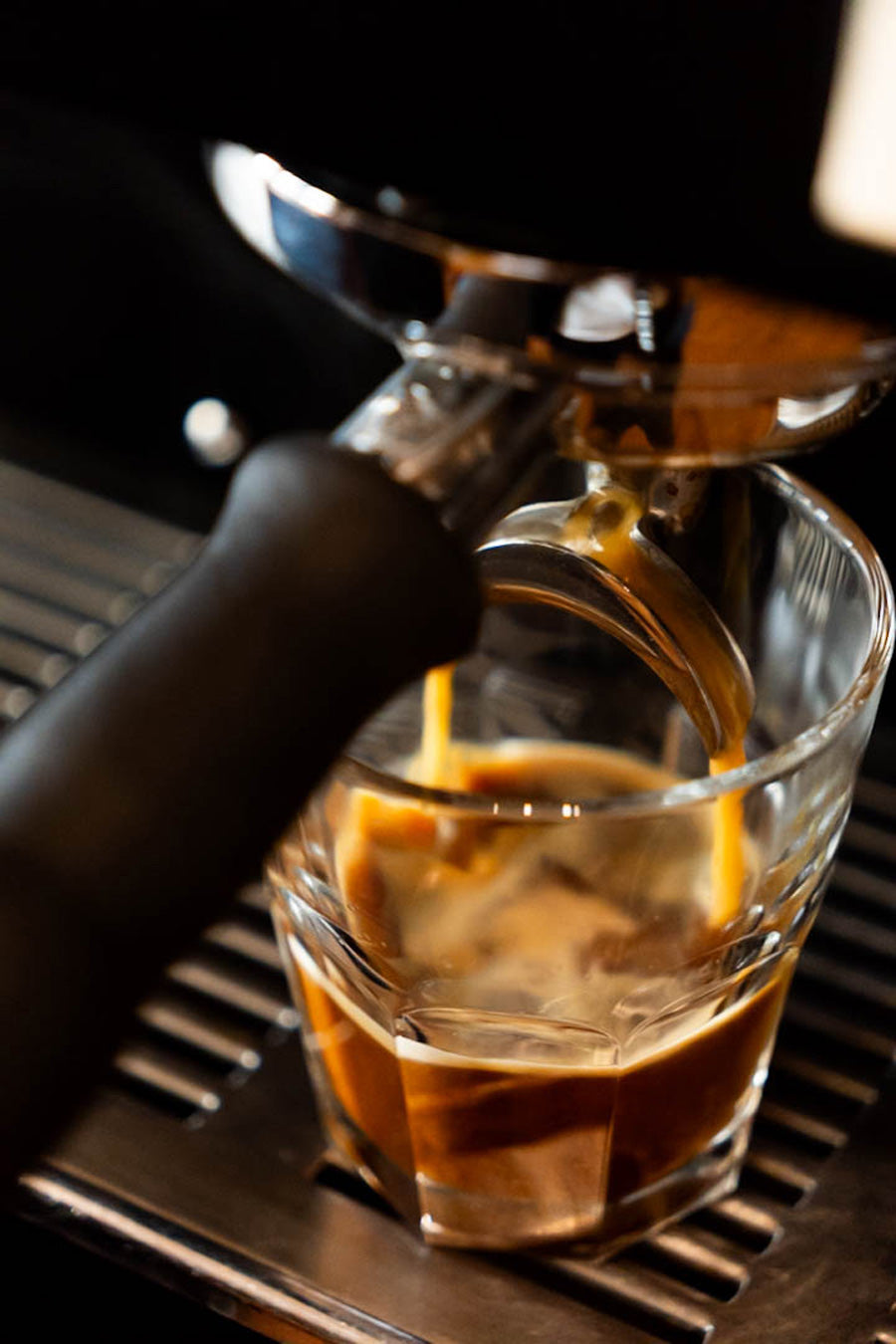
Good coffee is not just made from good beans. Grind size, dosage, brewing temperature, contact time, and water quality strongly influence the result. In a roastery, you can ask specific questions: Why is the espresso running too fast? Why does the coffee taste bitter? Which setting suits the automatic machine?
Beginners especially benefit when advice doesn't end with choosing the variety. Often, small adjustments are enough to achieve significantly better results: grinding a little finer, changing the extraction time, using softer water, or choosing a different roast.
Experience the production process: why a roastery tour builds trust
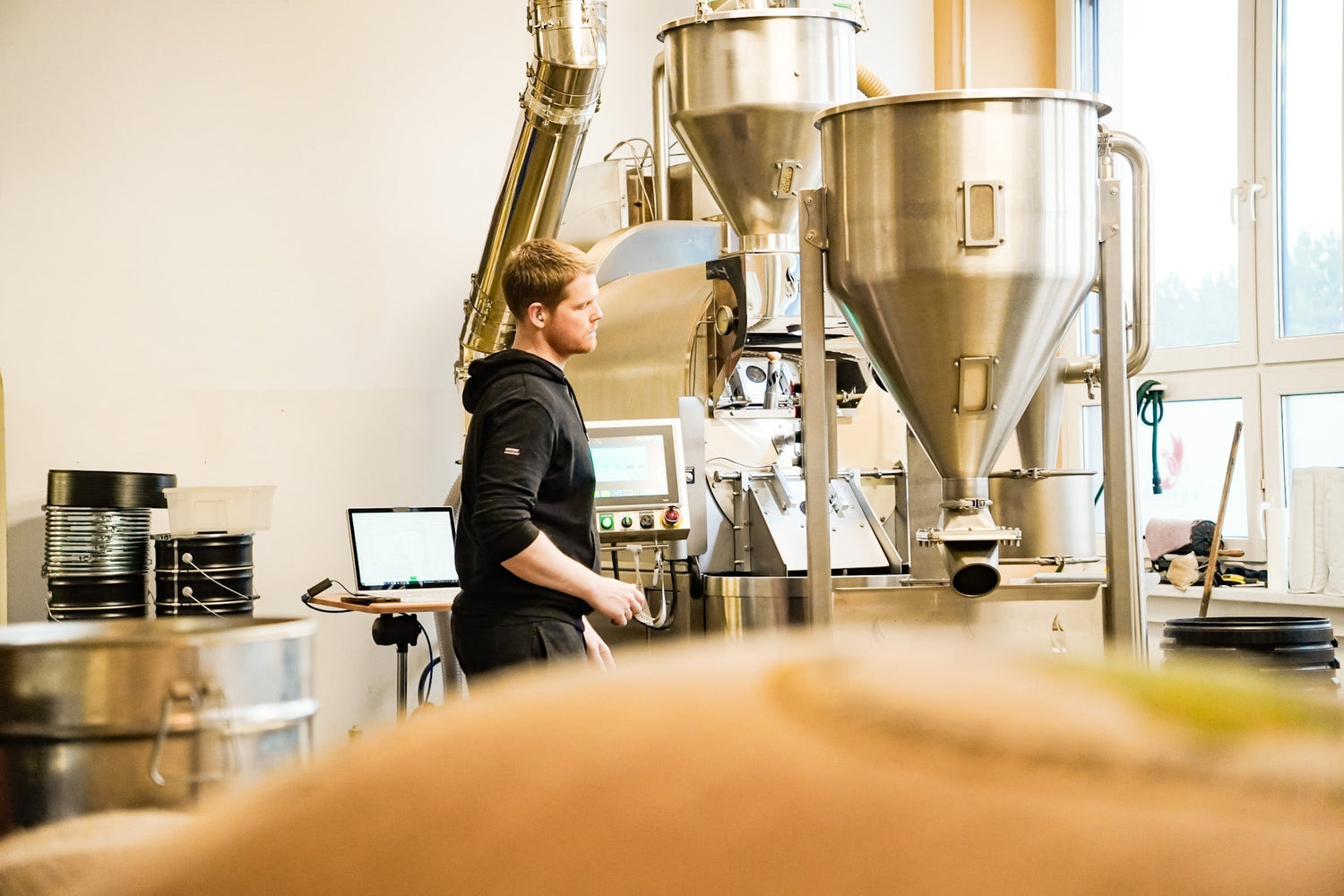
If you really want to understand coffee, you should visit a coffee roastery. A tour makes visible what usually remains hidden: green coffee, roasting machine, aroma development, color change, quality control, and tasting. An everyday product transforms into a craft that you can smell, see, and taste.
Roast curve, drum roasting, and quality control explained simply
In drum roasting, green coffee beans are heated in a controlled manner. During this process, complex chemical reactions occur: water evaporates, sugars caramelize, acids change, and aromas develop. The roast curve describes how temperature and time progress. Even small deviations can affect the taste.
A good roastery not only controls the technology but also the sensory result. This includes visual inspection, aroma, sample roasts, cuppings, and recurring quality controls. This ensures that a coffee doesn't just taste good by chance, but is reproducible.
Product recommendation: Roastery tour at Kaffanero Coffee Roastery
If you don't just want to hear the process explained, but experience it directly, a roastery tour at our roastery is a suitable option. You'll gain insights into green coffee, roasting, aroma formation, and the work behind each batch.
Such a coffee roastery tour is particularly suitable for anyone who wants to consciously buy coffee beans in the future. You'll better understand why roast date, origin, roast profile, and preparation belong together – and you can better interpret recommendations in everyday life.
Who particularly benefits from buying coffee locally?
Buying coffee locally benefits many people, but especially those who want to get more out of their cup. If you use a portafilter, you will benefit from precise advice and fresh espresso roasts. If you own a fully automatic machine, recommendations will help you avoid bitter or bland results.
Filter coffee fans also often find more exciting beans in local roasteries than in conventional retail. Those who are primarily familiar with supermarket coffee quickly discover how differently coffee can taste. And those who have been drinking coffee for a long time get new impulses through changing origins and roast profiles.
A visit is particularly useful if you:
- haven't found your personal favorite coffee yet,
- want to improve your brewing method,
- want to learn more about origin and roasting,
- are looking for fresher beans with a traceable roast date,
- want to support regional craft businesses.
Conclusion: Buying locally means drinking more consciously, getting better advice, and discovering more
Buying coffee beans locally is more than just a purchasing decision. It's direct access to freshness, craftsmanship, transparency, and taste. Small roasteries offer you the opportunity to taste coffee, ask questions, and choose beans that truly suit your brewing method.
If you've mostly decided based on price, brand, or packaging until now, the next step is worthwhile: Visit a roastery near you, discuss your taste, and pay attention to the roast date, roast profile, and origin. It becomes even more helpful if you experience the roasting process live. This way, coffee becomes not just a drink, but a conscious indulgence.